


SKU #4284
·
553 views
Etude
Plum
User rating
1 vote100% positive reviews
No ratings yet — be the first.
Type of Sort
Home Drain
Store offers · 3 from 3 stores
Prices are updated on loadLoading offers…
Available at: Крымский Фрукт · Сад от А до Я · Sadovaya Kollektsiya
Aggregator catalog: prices are collected automatically from store websites, normalized by AI and converted at the current exchange rate. Before ordering, confirm the price and availability on the store's website. This block is not indexed by search engines — the data is loaded after the page opens.
About product

The variety was obtained by crossing Evrazia 21 with the domestic plum variety Volzhskaya Krasavitsa. Originator — All-Russian Research Institute of Genetics and Selection of Fruit Plants named after I.V. Michurin. Author G.A. Kursakov. The variety was approved for the Central Chernozem region in 1985. The tree is above-average height with a rounded crown. Bark of the trunk and scaffold branches…
Type of Sort
Home Drain
Description
The variety was obtained by crossing Evrazia 21 with the domestic plum variety Volzhskaya Krasavitsa. Originator — All-Russian Research Institute of Genetics and Selection of Fruit Plants named after I.V. Michurin. Author G.A. Kursakov. The variety was approved for the Central Chernozem region in 1985.
The tree is above-average height with a rounded crown. Bark of the trunk and scaffold branches is dark brown, slightly rough, with a gray coating. Buds on the trunk are few. Shoots are straight, thick, brownish, covered with numerous small yellow buds. Internodes are medium. Buds are medium-sized, conical, dark brown, not pressed against the shoot, with a pointed apex. Leaves are above-average size, oval-egg-shaped, dark green, slightly wrinkled. Leaf blade is slightly concave, margin doubly-toothed, wavy. Apex is slightly pointed, sharply transitions to the tip. Base is oval. Petiole is medium length and thickness, pigmented. Stipules are fairly large, round, 1-2 per leaf petiole. Flowers are large, petals oval, not touching each other. Stigma is located above the anthers.
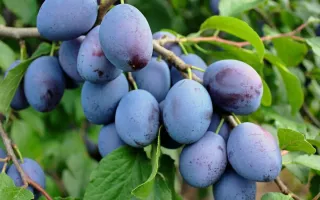
Fruits are above-average size, oval-egg-shaped, reddish-purple, with a dense waxy coating. Flesh is greenish-yellow, firm, juicy, slightly acidic-sweet (4.3 points). Stone is oval, medium size, easily separates from the flesh. Biochemical composition: dry matter — 15.4%, sugars — 7.16% (in some years 11.84%), acids — 1.96%, P-active catechins — 142%, ascorbic acid — 15.0 mg/100g. The variety is for table and technical purposes.
Flowering period is medium-early. Fruits ripen simultaneously, in medium terms (beginning of the third decade of August). Winter hardiness of wood and flower buds is high. The tree is resistant to pests and diseases.
Advantages: increased winter hardiness of wood and flower buds, early fruiting, high yield, attractive fruits, good taste qualities.
Disadvantages: none identified.
Video · 2 videos
Suggest a video →Crop & resistance
Crop
Specifications
| Type of Sort | |
|---|---|
| Catalog | Catalog → Plum |
Not yet комментариев. Be the first!
Alternatives
Plum saplings · similar varieties



See also
Often considered together with this variety



Recently viewed
Products you’ve viewed on this site
Reviews · 0