


SKU #48642
·
80 views
Valar
Peanut
Subsidiary "Railin"User rating
0 votes0% positive reviews
No ratings yet — be the first.
Vegetation Period
130
Ripening Period
Late (135-145 days)
Oil Content
45
Assignment
Food Industry, Oil Processing
About product

Peanut, or groundnut, is an annual leguminous crop distinguished by high yield and economic attractiveness. It can grow on poor sandy soils in hot conditions, making it promising for cultivation in Ukraine due to suitable soil-climatic conditions and a stable market for sale. Peanut contains a high percentage of oil (45–60%) and protein, making it a valuable raw material for the food and industria…
Vegetation Period
130
Ripening Period
Late (135-145 days)
Oil Content
45
Assignment
Food Industry, Oil Processing
Description
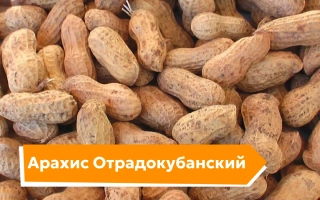
Peanut, or groundnut, is an annual leguminous crop distinguished by high yield and economic attractiveness. It can grow on poor sandy soils in hot conditions, making it promising for cultivation in Ukraine due to suitable soil-climatic conditions and a stable market for sale. Peanut contains a high percentage of oil (45–60%) and protein, making it a valuable raw material for the food and industrial sectors.
For successful peanut cultivation, its biological characteristics must be considered. The plant requires a lot of heat and has a long vegetation period — from 130 to 160 days. Peanut flowers are self-pollinating; after pollination, special projections — gynophores — drop into the soil and form pods. The pod maturation process stops at temperatures below 20°C. Sowing is conducted at the end of April, after the threat of frost has passed, using seeders with holes corresponding to seed size (about 5 mm). The seeding rate is 70–100 kg per hectare.
Peanut care includes watering during critical growth phases — bud formation, flowering, and pod development — as well as protection against diseases and pests. Herbicides similar to those used for soybeans, such as Bazagran M and Targa Super, are applied for weed control. Special attention is paid to preventing root rots, so seeds are treated before sowing. In Ukrainian conditions, special peanut varieties, such as 'Valar', have been developed, adapted to local climate and soils, which facilitates successful cultivation of this crop on home plots and in agriculture.
For successful peanut cultivation, its biological characteristics must be considered. The plant requires a lot of heat and has a long vegetation period — from 130 to 160 days. Peanut flowers are self-pollinating; after pollination, special projections — gynophores — drop into the soil and form pods. The pod maturation process stops at temperatures below 20°C. Sowing is conducted at the end of April, after the threat of frost has passed, using seeders with holes corresponding to seed size (about 5 mm). The seeding rate is 70–100 kg per hectare.
Peanut care includes watering during critical growth phases — bud formation, flowering, and pod development — as well as protection against diseases and pests. Herbicides similar to those used for soybeans, such as Bazagran M and Targa Super, are applied for weed control. Special attention is paid to preventing root rots, so seeds are treated before sowing. In Ukrainian conditions, special peanut varieties, such as 'Valar', have been developed, adapted to local climate and soils, which facilitates successful cultivation of this crop on home plots and in agriculture.
Specifications hover over for a hint about the specification
| Vegetation Period | 130 |
|---|---|
|
Ripening Period
Ripening Period
It takes 70-100 days until pepper reaches flowering stage, 130-160 days until technical fruit ripeness, and 135-180 days until physiological ripeness. |
Late (135-145 days) |
| Oil Content | 45 |
| Assignment | |
| Registration year | 2007 |
| Catalog | Catalog → Peanut |
| Manufacturer | Subsidiary "Railin" |
| Country | Ukraine |
Store offers
Prices are updated on loadLoading offers…
Aggregator catalog: prices are collected automatically from store websites, normalized by AI and converted at the current exchange rate. Before ordering, confirm the price and availability on the store's website. This block is not indexed by search engines — the data is loaded after the page opens.
Not yet комментариев. Be the first!


See also
Often considered together with this variety



Recently viewed
Products you’ve viewed on this site
Reviews · 0