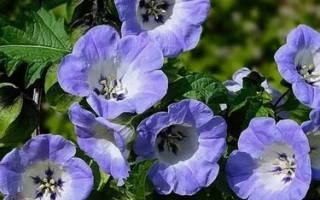
Nicandra physalodes (also known as Apple of Peru or Shoofly plant) is a decorative annual from the Nightshade family, native to Peru. The plant reaches a height of up to 1 meter, sometimes up to 1.5 m in fertile soil, with a width of about 30–40 cm. Leaves are large, egg-shaped and lobed with serrated edges, soft and hollow stems. Flowers are bell-shaped, light purple or blue, up to 3–4 cm in diameter, each flower lives for one day. After blooming, the calyx changes color from bright green to almost black.
The fruits are spherical berries with a thin membranous wrapping – “Chinese lanterns”, which remain on the bush for a long time and can be used in winter bouquets. The fruit is yellow, 1–1.5 cm in diameter; seeds are light brown, bony.
Nicandra grows well in sandy, loamy, and clay soils, prefers moist soil and sunny places. It is drought-resistant but requires occasional abundant watering on hot days. It does not tolerate frost; planting seedlings should be done after the threat of return frosts, with a distance between plants 30–40 cm.
In the garden, it can be used as a solo plant, in mixborders, as part of background plantings and for cut flowers. Thanks to its bright colors and decorative fruits, the plant attracts attention and also repels flies. Seeds retain their germination capacity for decades when deeply buried.
Nicandra was used in Tibetan medicine as a diuretic, analgesic, and anti-inflammatory agent; however, caution should be exercised when using it for medicinal purposes, as the fruits and leaves are not recommended for consumption.