


SKU #8509
·
1 955 views
White Stinkhorn
Mushrooms
User rating
2 votes100% positive reviews
No ratings yet — be the first.
Household Value
Edible Mushroom
Mushroom Type
Gilled mushrooms
About product
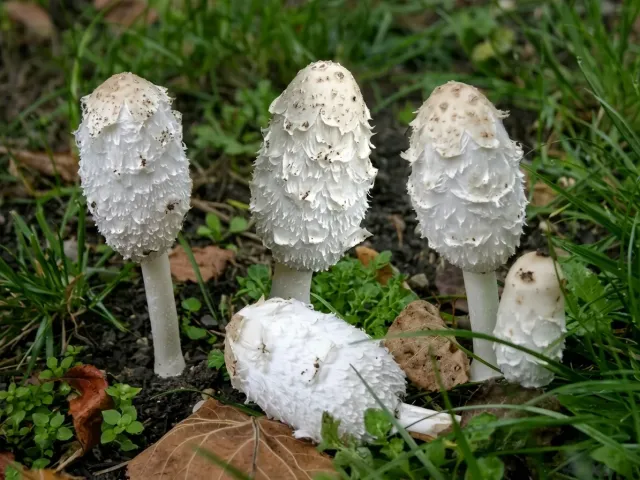
Dried mycelium of the mushroom "White Stinkhorn"
White Stinkhorn is an edible mushroom considered a delicacy, used fresh (boiled for about 10-20 minutes) in soups and main courses, and can be pickled. Collect mushrooms with light gills; they must be prepared on the day of collection. This mushroom is incompatible with alcohol!
Grows: abundantly from late August to late September after…
Household Value
Edible Mushroom
Mushroom Type
Gilled mushrooms
Description
Dried mycelium of the mushroom "White Stinkhorn"
White Stinkhorn is an edible mushroom considered a delicacy, used fresh (boiled for about 10-20 minutes) in soups and main courses, and can be pickled. Collect mushrooms with light gills; they must be prepared on the day of collection. This mushroom is incompatible with alcohol!
Grows: abundantly from late August to late September after rain, on rich, fertilized, moist soil, on meadows, in gardens, on cultivated soil, on lawns of parks and squares, in groups. Cap: 3-6 cm in diameter and 10-15 cm high, egg-shaped, tall, does not spread out over time, but darkens quickly as it matures. Gills: frequent, thin, wide, initially white, then quickly turn red, and finally blacken and spread. Stipe: 5-15 cm long and 1-3 cm in diameter, widened at the base, silky-fibrous white, with a narrow, fibrous, disappearing, white ring at the top. Flesh: thin, soft, fragile, in the stipe — soft-fibrous, white, then grayish. Stinkhorn — a fast-growing mushroom, matures within a few hours, edible only when young, not older than one day.
Cultivation technology is similar to that of champignons. This applies to both the location and timing of cultivation and substrate preparation methods. Like champignons, White Stinkhorns are grown in boxes, rows, or on shelves. However, they can be successfully cultivated on poor-quality organic matter already unsuitable for growing champignons. The requirements of the Stinkhorn to substrate properties are not fully understood, so we warmly invite amateur gardeners to experiments. Cultivation on the site begins no earlier than late May. Substrate can be any, even rabbit manure, sufficiently fresh, with a high amount of straw. In a wind-protected place, form a pile 1.2 m wide and 70 cm high, then water it abundantly. Every 5-8 days, 3-5 times, turn the pile. After each turning, the substrate temperature should rise to 50...60 °C.
It is recommended to enrich the substrate with 5-8 kg of slaked lime. The ready substrate should have a moisture content of 65-70%. Choose a sunny or partially shaded location, protected from wind. To protect mushrooms from direct sunlight and rain, cover the rows with shelters. Black mushroom can also be grown in a greenhouse. From the prepared substrate, form a bed 20-25 cm high or fill wooden frames or other containers. The part of the greenhouse designated for mushrooms is separated by boards and filled with manure to a height of 20 cm.
For 1 m2 surface area, you will need 1 liter of mushroom spawn, evenly sown to a depth of 3-5 cm. To prevent drying, cover the substrate surface with paper or cloth. As needed, water the bed carefully. It is necessary to monitor that the temperature in the greenhouse does not exceed 30 °C. At very high temperatures, the mushroom spawn dies. At a temperature of 20...25 °C, the White Stinkhorn spawn occupies the entire volume of the substrate. After this, remove the drying protection material from the beds and cover them with a 4-cm layer of topsoil (taken in equal proportions of peat and clay or peat and compost soil). It is also useful to add slaked lime (1 part to 20 parts of soil) to this mixture. At this stage, maintain high humidity and a temperature of 16...18 °C.
Approximately one month after covering the beds with topsoil, the first mushrooms appear. White Stinkhorn is a prolific mushroom, and its families are numerous. Collect it while the cap is firm and tightly adheres to the stipe, and the edge remains white and uncolored. Darkened mushrooms are also collected, but not for consumption. Black mushroom is very tasty. It should be consumed within 24 hours after collection. In the refrigerator, it can be stored for 48 hours. During the harvesting period, temperature increase should be avoided. Therefore, when cultivating in a greenhouse, the plantation is established in the second half of July, so that harvesting falls during the period from late August to early October. In heated auxiliary rooms, Black mushroom can be cultivated year-round.
During the harvest period, air temperature should be 12...18 °C. The room where the mushrooms grow should be ventilated. Lack of fresh air negatively affects the harvest. In addition, the soil covering the beds should be constantly moist. At high air humidity, water the beds 2-3 times a week (1 liter of water per 1 m2).
It is not permissible for water to penetrate under the soil layer into the substrate. Periodically, carefully clean the surface of the bed, replenishing the soil with fresh portions. If you intend to cultivate mushrooms for a long time, after each cycle, perform thorough disinfection. Treat the room and equipment with formalin.
Video · 9 videos
Suggest a video →Specifications
| Household Value | |
|---|---|
| Mushroom Type | |
| Catalog | Catalog → Mushrooms |
Store offers
Prices are updated on loadLoading offers…
Available at: Ogorod
Aggregator catalog: prices are collected automatically from store websites, normalized by AI and converted at the current exchange rate. Before ordering, confirm the price and availability on the store's website. This block is not indexed by search engines — the data is loaded after the page opens.
Not yet комментариев. Be the first!






See also
Often considered together with this variety


Recently viewed
Products you’ve viewed on this site
Reviews · 0