


SKU #8514
·
529 views
Pink Oyster Mushroom
Mushrooms
User rating
0 votes0% positive reviews
No ratings yet — be the first.
Household Value
Edible Mushroom
Mushroom Type
Gilled mushrooms
Prices in stores
from51 €per 1 kg
pack from 0.51 € per 10 g
6 offers from 6 stores
Store offers · 6 from 6 stores
Prices are updated on loadLoading offers…
Available at: 7 Соток · Best Harvest · Kivagro · Plodsad · Дарвін · Zelensvit
Aggregator catalog: prices are collected automatically from store websites, normalized by AI and converted at the current exchange rate. Before ordering, confirm the price and availability on the store's website. This block is not indexed by search engines — the data is loaded after the page opens.
About product

Dry mycelium of the mushroom "Pink Oyster Mushroom"
Pink Oyster Mushroom is a tasty edible mushroom in its young stage. Dishes made from oysters retain a distinct mushroom flavor and aroma, as well as beneficial properties, regardless of the preparation method. Pink Oyster Mushroom is an excellent remedy for stomach ailments, including healing for ulcers and gastritis. It is easily cultivated…
Household Value
Edible Mushroom
Mushroom Type
Gilled mushrooms
Description
Dry mycelium of the mushroom "Pink Oyster Mushroom"
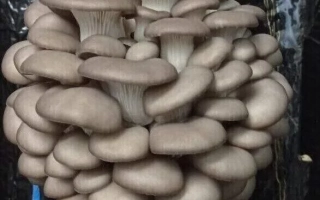
Pink Oyster Mushroom is a tasty edible mushroom in its young stage. Dishes made from oysters retain a distinct mushroom flavor and aroma, as well as beneficial properties, regardless of the preparation method. Pink Oyster Mushroom is an excellent remedy for stomach ailments, including healing for ulcers and gastritis. It is easily cultivated on straw, cotton, and corn waste, growing in clusters or fused groups.
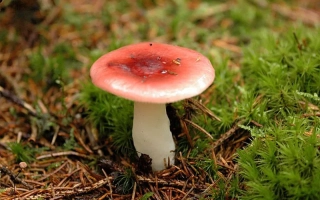
Cap: 3-8 cm in size, tongue-shaped or rounded, initially convex or slightly depressed, fibrous, with a thin curled edge, later lobed, thin, weakly hairy, with a thin hairy edge. Initially rich pink, later whitish-pink with yellowish specks. Gills: frequent, descending toward the stem. Initially red-pink, later whitish-pink, yellow-orange. Stem: 1-2 cm long and 0.5-1 cm in diameter, lateral, curved, tapered, whitish-pink. Flesh: thin, tender, white, pinkish, odorless.
Cultivating Pink Oyster Mushroom on a home plot: in a shaded area, on a 2.5-3 m2 area, dig 30 cm deep, and fill with nutrient-rich mix.
First layer: (spread on the bottom) fallen leaves, grass, or tree bark (10 cm). Second layer: forest compost or soil from under trees (10 cm). Then evenly sprinkle dry mycelium previously mixed with 1 liter of dry soil over the entire area. Third layer: plant residues, like in the first layer, but 3 cm thick. Fourth layer: garden soil (3-5 cm). After sowing, water using drip irrigation.
First mushrooms appear after 1.5-2 months, then every 1-1.5 weeks. In indoor spaces, cultivate similarly, but plant in trays. The mycelium can live up to 5 years. Cultivation can be done at any time of the year.
Video · 9 videos
Suggest a video →Specifications
| Household Value | |
|---|---|
| Mushroom Type | |
| Catalog | Catalog → Mushrooms |
Not yet комментариев. Be the first!





See also
Often considered together with this variety




Recently viewed
Products you’ve viewed on this site
Reviews · 0