


SKU #8535
·
1 077 views
Marmoreal Oyster Mushroom
Mushrooms
User rating
2 votes50% positive reviews
No ratings yet — be the first.
Household Value
Edible Mushroom
Mushroom Type
Gilled mushrooms
Prices in stores
from5.22 €per 1 kg
pack from 0.65 € per 10 g
4 offers from 4 stores
Store offers · 4 from 4 stores
Prices are updated on loadLoading offers…
Available at: Перший Оптовий · Agro-market · Дары Природы · Grubu · Світ Рослин · Все Росте
Aggregator catalog: prices are collected automatically from store websites, normalized by AI and converted at the current exchange rate. Before ordering, confirm the price and availability on the store's website. This block is not indexed by search engines — the data is loaded after the page opens.
About product

Marmoreal Oyster Mushroom spawn
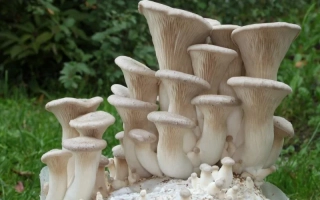
Marmoreal Oyster Mushroom spawn is a traditional delicacy in Southeast Asian countries, a true find for lovers of exotic cuisine. In Japan and China, two varieties of this mushroom are widely cultivated: white ("white oak mushroom") and light-brown ("brown oak mushroom").
Shimeji is highly prized in Japanese cuisine for its refined, slightly sweet-nutty f…
Household Value
Edible Mushroom
Mushroom Type
Gilled mushrooms
Description
Marmoreal Oyster Mushroom spawn
Marmoreal Oyster Mushroom spawn is a traditional delicacy in Southeast Asian countries, a true find for lovers of exotic cuisine. In Japan and China, two varieties of this mushroom are widely cultivated: white ("white oak mushroom") and light-brown ("brown oak mushroom").
Shimeji is highly prized in Japanese cuisine for its refined, slightly sweet-nutty flavor and crisp texture. It pairs exceptionally well with meat and seafood, and is used in soups and sauces. The mushroom is especially delicious when gently sautéed over low heat with a small amount of butter.
Can be stored in the refrigerator for up to 10 days. During storage, it may develop a white, fluffy coating that can easily be washed off under running water. Mushrooms should not be soaked in water, as they absorb it readily and become brittle and fragile. Raw mushrooms have a bitter, unpleasant taste and are difficult to digest, so they are not edible.
Cultivation of "Marmoreal Oyster Mushroom"
Only hardwood logs without signs of rot, cut 1-4 months prior to inoculation, are used. One package (10 pieces) is suitable for logs no longer than 30 cm and up to 15 cm in diameter. Before inoculation, logs must be soaked in water for 2-3 days, then allowed to drain excess water over the next day. In the prepared log, drill holes in a checkerboard pattern, 5-6 cm deep and 1 cm in diameter, spaced 10-15 cm apart. Insert the "spawn" with clean hands and seal the holes with pieces of bark, paraffin, moistened cotton, etc. After wrapping the log in polyethylene film with small ventilation holes, place it in a dark, humid location for mycelium colonization.
Under favorable conditions (t=20-25ºC, humidity 80-90%), the log will be colonized by mycelium within 2-3 months. When white mold appears at infection sites and on the ends of the log, remove the film and bury the logs vertically into the ground to two-thirds of their length, placing moist leaves or straw at the bottom of the hole. Outdoors, choose a shaded, wind-protected area. Indoors, bury logs in pots or containers with soil; suitable locations are unheated rooms where optimal conditions can be created. Care involves misting the plants 2-3 times per week with a sprayer, and daily during the fruiting stage.
Under favorable conditions, mushrooms fruit in waves several times a year, with fruiting lasting from 3 to 7 years depending on the wood density. Yield is 15-30% of the wood mass and depends on climatic conditions. If planted in summer or autumn, fruiting will occur the following year. Inoculation of wood indoors is done year-round, while planting in soil occurs from April to October.
Specifications
| Household Value | |
|---|---|
| Mushroom Type | |
| Catalog | Catalog → Mushrooms |
Not yet комментариев. Be the first!



See also
Often considered together with this variety





Recently viewed
Products you’ve viewed on this site
Reviews · 0