



SKU #8505
·
1 943 views
Purple Oyster Mushroom
Mushrooms
User rating
2 votes100% positive reviews
No ratings yet — be the first.
Household Value
Edible Mushroom
Mushroom Type
Gilled mushrooms
About product
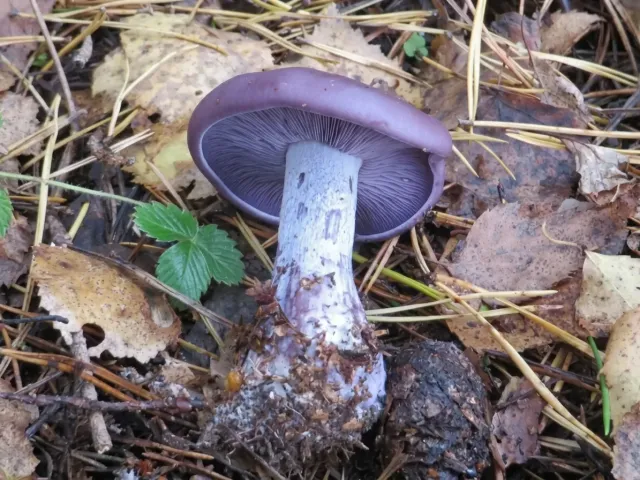
Dried mycelium of the mushroom "Purple Oyster Mushroom"
Purple Oyster Mushroom — a delicious late-season edible mushroom, used after boiling for about 20 minutes (discard the broth, do not consume), in second dishes — fried, braised, salted, and pickled (young and medium firm mushrooms).
Grows: (massively from mid-September until frost in the last decade of October) in mixed (with oak,…
Household Value
Edible Mushroom
Mushroom Type
Gilled mushrooms
Description
Dried mycelium of the mushroom "Purple Oyster Mushroom"
Purple Oyster Mushroom — a delicious late-season edible mushroom, used after boiling for about 20 minutes (discard the broth, do not consume), in second dishes — fried, braised, salted, and pickled (young and medium firm mushrooms).
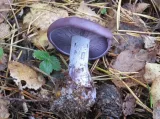
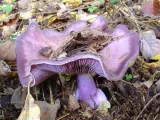
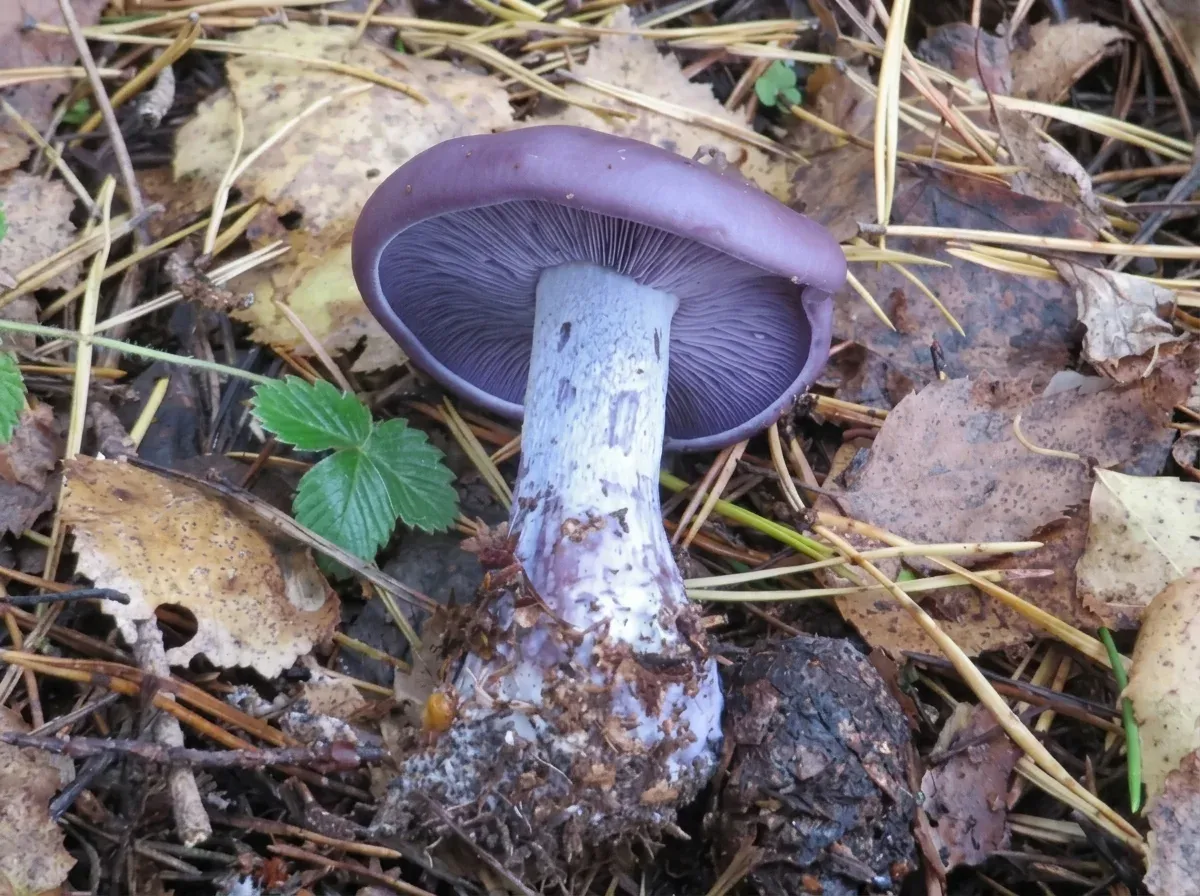
Grows: (massively from mid-September until frost in the last decade of October) in mixed (with oak, pine) and coniferous (with spruce and pine) forests, in gardens, on edges, under trees, on soil, litter, in groups. Cap diameter 5-10 (15) cm, hemispherical, convex with rolled edge, later — convex-spread with rolled edge, fleshy, initially bright purple, then fades to pale lavender with brownish tint, reddish-brown.
Gills: frequent, free, initially bright purple, later — pale, lavender, ochre-lavender. Stipe: 4-8 cm long and 1-2 cm in diameter, cylindrical, slightly expanded or club-shaped, smooth, fibrous, solid, later — hollow, pale purple, pale lavender. Flesh: dense, fleshy, firm, lavender, later — ochre-cream, with slight fruity aroma.
When cultivating Purple Oyster Mushroom, the following compost compositions are used:
Variant 1. Fresh unspoiled dry straw — 12 kg, fresh poultry manure — 8 kg, preparation time — 24-26 days.
Variant 2. Fresh unspoiled dry straw — 12 kg, fresh horse manure — 8 kg, preparation time — 22-24 days.
Variant 3. Fresh unspoiled dry straw — 12 kg, fresh cow manure — 8 kg, preparation time — 23-25 days.
Cultivation in the garden. Cultivation of Purple Oyster Mushroom is similar to that of champignons. Purple Oyster Mushroom forms fruiting bodies when outdoor temperature drops below 15 °C, i.e., in autumn, winter, and even spring. The best time to plant the culture is May, but in principle, cultivation can begin in autumn as well. In the garden, it is cultivated on raised beds, in boxes, or bags placed in the shade of trees and shrubs. As with champignon cultivation, after planting, the substrate is covered and kept at high humidity. The mycelium of Purple Oyster Mushroom develops better at a temperature around 20 °C. After 2-3 weeks, the substrate is colonized by purple mycelium. Then, a 5 cm layer of moist soil is applied and the culture is covered. Mixtures suitable for champignons can be used. After 2-3 weeks, mycelium will appear on the soil surface. There is no need to till the soil for Purple Oyster Mushroom.
Approximately 3 weeks after covering, at temperatures between 10 to 15 °C, the first mushrooms form and the covering is removed. Fruiting bodies appear in waves, then continuously. It is important that the covering layer of soil always maintains optimal moisture (test by squeezing). If too dry, small mushrooms will die; if overly wet, mycelium will spread excessively and form a dense purple layer from which mushrooms will hardly emerge.
In both cases, applying a 0.5 cm layer of moist covering soil helps. After each wave of harvest, add soil in the same amount. The culture of Purple Oyster Mushroom can withstand winter well. If autumn temperatures drop below 5 °C, beds are covered with bags and topped with a layer of leaves or straw at least 10 cm high.
If in spring temperatures rise above 10 °C, the covering is removed and a thin layer of soil is reapplied. At temperatures from 10 to 15 °C, fruiting bodies form again. Purple Oyster Mushroom is harvested by twisting it out of the soil as soon as its cap assumes a horizontal position. After 3-4 months of cultivation, the substrate becomes exhausted and can be used to improve soil structure. Yield is relatively low, about 3% of substrate mass.
Cultivation indoors. In suitable rooms with constant temperature 10-15 °C, Purple Oyster Mushroom can be cultivated on raised beds, in boxes, or in bags. However, sufficient lighting and constant fresh air supply are required; otherwise, the stems become too long and the caps too small. For inoculation, germination phase, and harvest, the same principles apply as for outdoor cultivation of this mushroom. Consumption norm: one package is sufficient for 20 kg of compost.
Video · 9 videos
Suggest a video →Specifications
| Household Value | |
|---|---|
| Mushroom Type | |
| Catalog | Catalog → Mushrooms |
Store offers
Prices are updated on loadLoading offers…
Available at: Світ Рослин
Aggregator catalog: prices are collected automatically from store websites, normalized by AI and converted at the current exchange rate. Before ordering, confirm the price and availability on the store's website. This block is not indexed by search engines — the data is loaded after the page opens.
Not yet комментариев. Be the first!






See also
Often considered together with this variety








Recently viewed
Products you’ve viewed on this site
Reviews · 0