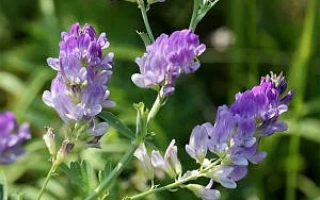
Lucerne of the variety Zarnitsa is a fodder plant of the legume family, characterized by high nutritional value and resistance to adverse conditions. This variety features a powerful root system that penetrates the soil to a depth of up to two meters, ensuring high drought resistance and the plant's ability to independently supply itself with water. Lucerne Zarnitsa adapts well to various soil types and can grow on the same site for up to seven years, making it an economically viable crop for long-term use.
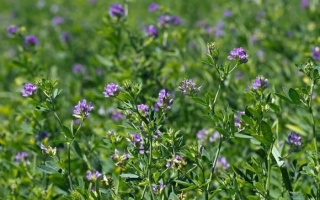
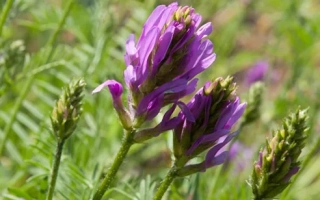
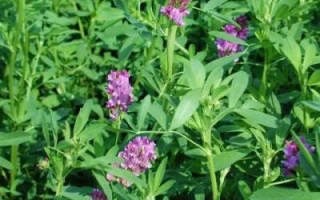
The plant has a semi-erect bush with stems up to 100 cm tall, medium coarseness, and branching. Leaves are soft, medium-sized, and inflorescences are cylindrical and head-like with light-purple flowers. The vegetation period allows for several cuttings per season: the first cutting occurs 66-71 days after the beginning of the spring vegetation, followed by subsequent cuttings at intervals of 30-40 days. Seed yield reaches 6.3 ц/га, and green mass yield — 690 ц/га. Seeding rates vary depending on moisture conditions, enabling adaptation of the crop to different climatic zones.
Lucerne Zarnitsa is a valuable feed for livestock due to its high content of protein, vitamins, and chlorophyll, which contributes to improved digestion and overall animal health. Additionally, the plant has nitrogen-fixing properties, which contribute to soil restoration and improvement of soil structure, increased fertility, and humus accumulation. Lucerne is also used as a honey plant and aids in combating certain diseases due to its medicinal properties. For high-quality hay, the plant is cut during flowering and dried until fully dry.