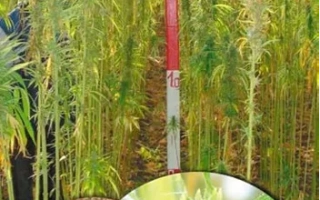
Rosinka flax is a late-maturing variety of fax flax (Linum usitatissimum L. f. elongata) intended for the production of flax fiber. The plant is characterized by high growth and a long stem, white flower petals without longitudinal folds, and medium-sized pods without fringed false partitions. The seeds are brown, with a mass of 1000 seeds of 4.5 g. The vegetative period lasts from 79 to 89 days. The straw yield reaches 38.5 c/ha, which is higher than the average standard, and the seed yield is 4.6 c/ha. The fiber content in the plant is 27.8%, the long fiber yield is 25.1%, while the relative breaking load is 16.2 gf/tex. The variety has good resistance to lodging and shedding, moderate resistance to fusarium wilt of seedlings and bacteriosis, high resistance to rust, but is susceptible to anthracnose and pasmo. To improve the quality of flax straw and increase flax fiber indicators, the preparation "Rosinka" is used - a biotechnical means in the form of an aqueous solution with nitrogen-containing substances and an adhesive component. It stimulates the development of beneficial microorganisms and accelerates the process of dewing, which contributes to improved flax straw maturation. The preparation contains thiourea with fungicidal properties, which prevents the development of rotting bacteria, ensuring the preservation and quality of the fiber. The recommended consumption of the preparation is 3 liters per hectare. The preparation "Rosinka" is packed in 20-liter buckets and stored in covered warehouses at a temperature from -20°C to +40°C. The shelf life is one year from the date of manufacture. The use of this means allows to improve the quality of flax fiber and increase production efficiency, which makes the ROSINKA variety and the preparation for flax processing the optimal choice for flax growers seeking high quality and yield.