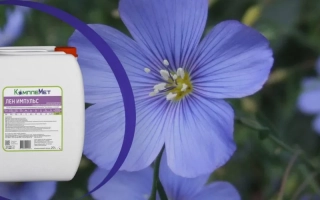
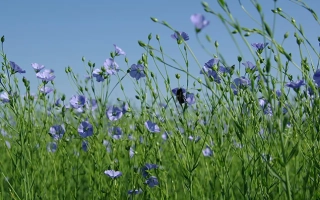
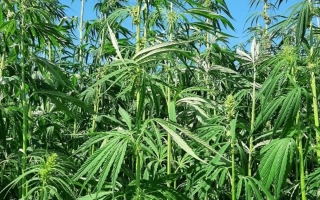
Flax, also known as Rusich, is an undemanding annual plant reaching about 50 cm in height, which thrives on various soil types. Thanks to its frost and drought resistance, flax is widely used in agriculture as a green manure crop to improve soil structure and enrich it with beneficial trace elements. Flax is sown in April-May, seedlings appear within 7-14 days, making it convenient for cultivation in different climatic conditions. Additionally, the plant effectively helps in the fight against pests, such as the Colorado beetle, which increases its value for agrarians.
Organic flax, grown without the use of chemical fertilizers and pesticides, is an ecologically clean product that finds wide application in the production of fabrics, paper, and other items. Such flax is characterized by high environmental safety and contributes to the preservation of the natural balance, which is especially important in modern agriculture and industry.
In addition to agronomic and industrial properties, flax possesses significant medicinal qualities. Flax seeds, long used in folk medicine, contain vitamins, fiber, and trace elements beneficial to human health. Flax oil is used to reduce inflammation, treat cough, as well as for stomach diseases and burns. Thanks to its healing properties, flax is a valuable plant for both agriculture and medicine.