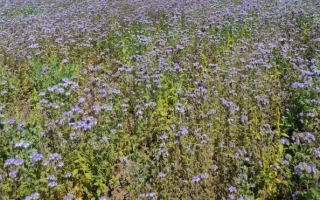
Polet is a variety of crambe (Crambe abyssinica) grown in various climatic zones, distinguished by high seed yield of up to 3.0 t/ha with oil content ranging from 43.6% to 46.2%. The seeds of this variety are characterized by their large size and high fat content (44.9–45.6%), with a predominance of erucic acid (up to 60%). Thanks to its drought resistance and undemanding nature, the plant grows quickly – the vegetation period is about 101 days. This makes it attractive for agricultural enterprises where fast harvest turnover is important.
Crambe oil obtained from the Polet variety seeds has a unique fatty acid composition: erucic acid makes up 60–64%, and oleic (≈15%) and linoleic (≈13%) acids are also present. It contains phytosterin (~0.5%) and tocopherol (~0.05%), which gives it antioxidant properties. The oil is produced by cold pressing, retains its natural aroma, and easily dissolves in other oils.
In the cosmetics industry, crambe oil is used as an emollient, conditioning agent, and solubilizer for UV filters. Thanks to its lightweight texture, it does not weigh down hair, improves combability, and reduces breakage, imparting shine without greasiness. The oil is also used in skin care products: balms, hand and body creams, as well as in foundation and concealer products, where it acts as a dispersing agent. In combination with UV filters such as Octocrylene, Ethylhexyl Salycilate, Homosalate, and Ethylhexyl Methoxycinnamate, crambe oil ensures formula stability and enhanced sun protection.
The Polet variety is resistant to pests (especially cruciferous flea beetles) and diseases, which reduces the need for chemical preparations. This makes it an environmentally safer option for producing technical oil, which can be used both in the food and industrial sectors. Thanks to high yield indicators and seed quality, Polet becomes the preferred choice for farmers and oil producers seeking sustainable development and high product standards.