


SKU #73508
·
60 views
NYURBINSKI
Wildrye
User rating
0 votes0% positive reviews
No ratings yet — be the first.
Usage Type
Hay, Silage Feed
Registration year
1991
About product

Nyurbinski wild rye (Elymus sibiricus L.) – a perennial grass of the spring-winter type with a loose-tufted structure and a fibrous root system penetrating up to 120–150 cm deep. The plant has a dense, multi-stemmed growth habit; stems are 60–120 cm tall, smooth, and well-leafed. Leaves are linear, flat, rough to the touch, 15–30 cm long and 0.8–1.4 cm wide.The inflorescence is a loose head hangin…
Usage Type
Hay, Silage Feed
Registration year
1991
Description
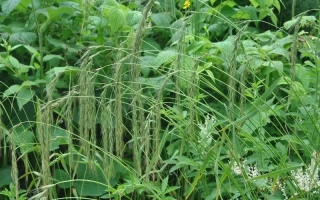
Nyurbinski wild rye (Elymus sibiricus L.) – a perennial grass of the spring-winter type with a loose-tufted structure and a fibrous root system penetrating up to 120–150 cm deep. The plant has a dense, multi-stemmed growth habit; stems are 60–120 cm tall, smooth, and well-leafed. Leaves are linear, flat, rough to the touch, 15–30 cm long and 0.8–1.4 cm wide.
The inflorescence is a loose head hanging downwards, 10–25 cm long, containing 13–30 spikelets and 5–7 florets. The fruit is an elongated caryopsis with a membranous pericarp, grayish-straw in color, 6–22 mm long; each head contains 50–100 grains, with a 1000-grain weight of 2–5.5 g.
Wild rye is cultivated across all regions of Siberia and the Far East, as well as in Central Asia. It is resistant to cold and drought, prefers soils with pH 6.5–7.5, and tolerates up to 5.6 salinity. The plant grows best during its second and third years but can maintain a grassland state for up to ten years.
The economic value of wild rye lies in its use as hay and silage crops; high-quality hay can only be harvested before heading. Yields range from 3–12 centners per hectare in Buryatia to 90–140 centners in Central Yakutia, reaching 30–40 centners when combined with alfalfa and clover. Stable seed yields are 6–8 centners.
Wild rye is not resistant to diseases but possesses high ecological plasticity, winter hardiness, and the ability to withstand prolonged periods of drought.
The inflorescence is a loose head hanging downwards, 10–25 cm long, containing 13–30 spikelets and 5–7 florets. The fruit is an elongated caryopsis with a membranous pericarp, grayish-straw in color, 6–22 mm long; each head contains 50–100 grains, with a 1000-grain weight of 2–5.5 g.
Wild rye is cultivated across all regions of Siberia and the Far East, as well as in Central Asia. It is resistant to cold and drought, prefers soils with pH 6.5–7.5, and tolerates up to 5.6 salinity. The plant grows best during its second and third years but can maintain a grassland state for up to ten years.
The economic value of wild rye lies in its use as hay and silage crops; high-quality hay can only be harvested before heading. Yields range from 3–12 centners per hectare in Buryatia to 90–140 centners in Central Yakutia, reaching 30–40 centners when combined with alfalfa and clover. Stable seed yields are 6–8 centners.
Wild rye is not resistant to diseases but possesses high ecological plasticity, winter hardiness, and the ability to withstand prolonged periods of drought.
Specifications
| Usage Type | |
|---|---|
| Registration year | 1991 |
| Catalog | Catalog → Wildrye |
| Legal data |
Show · 2
|
| Country | Russia |
Store offers
Prices are updated on loadLoading offers…
Aggregator catalog: prices are collected automatically from store websites, normalized by AI and converted at the current exchange rate. Before ordering, confirm the price and availability on the store's website. This block is not indexed by search engines — the data is loaded after the page opens.
Not yet комментариев. Be the first!


See also
Often considered together with this variety




Recently viewed
Products you’ve viewed on this site
Reviews · 0