


SKU #485
·
1 876 views
Test
Herbicides, Desiccants
Джінгма Кемікалс Ко., Лтд., Жеджян, КитайUser rating
1 vote100% positive reviews
No ratings yet — be the first.
Last Processing Date, Days
1
By Mode of Action
Non-selective herbicide
By Application Timing
Pre-emergence herbicide
Form of the preparation
Water-soluble granules
Prices in stores
from8.06 €per 1 l
pack from 40.28 € per 5 kg
2 offers from 2 stores
Store offers · 2 from 2 stores
Prices are updated on loadLoading offers…
Available at: Agro-sector · Cropagro · ЗЗР Агро
Aggregator catalog: prices are collected automatically from store websites, normalized by AI and converted at the current exchange rate. Before ordering, confirm the price and availability on the store's website. This block is not indexed by search engines — the data is loaded after the page opens.
About product

A powerful systemic non-selective herbicide and desiccant designed for total weed control.
Last Processing Date, Days
1
By Mode of Action
Non-selective herbicide
By Application Timing
Pre-emergence herbicide
Form of the preparation
Water-soluble granules
Description
Practical field application of «Test» herbicide: operational insights
In large-scale farming, when weeds threaten to overwhelm the field before planting or impede harvest, having a reliable non-selective herbicide is non-negotiable. The «Test» herbicide, manufactured by Jingma Chemicals Co., Ltd. (Zhejiang, China), is our go-to solution for total vegetation control. It serves dual purposes: as a powerful systemic herbicide for pre-planting preparation and as an effective desiccant for harvesting operations.
Operational experience and handling
The first thing an operator notices is the physical form—water-soluble granules. This is a significant advantage over liquid concentrates. It’s easier to measure, there is zero risk of messy leaks during transport, and it dissolves perfectly in the tank without clogging the sprayer nozzles or filters, which is a major time-saver during peak season.
- Application rates: We typically operate within the 1.0–2.0 L/ha range. For standard maintenance, the lower rate is sufficient, but when dealing with heavy infestations of perennial weeds like couch grass or field thistle, pushing to the 2.0 L/ha mark provides the consistency we need.
- Versatility: Whether it’s fruit orchards, vineyards, or oilseed crops like rapeseed and sunflower, the systemic action of the glufosinate-ammonium and glyphosate blend ensures that the herbicide travels right to the roots of the weeds, effectively killing them from within.
- Desiccation: When used as a desiccant, it performs exceptionally well, drying out sunflower heads evenly, which makes the subsequent harvest much faster and minimizes seed loss.
Since it is a non-selective, systemic herbicide, precision is key. We take care to avoid drift, especially in orchards, but the product's behavior makes it predictable. With a 3rd-level hazard rating, it aligns with standard safety protocols, requiring only basic protective equipment for the operator.
A major operational benefit is the short pre-harvest interval of just one day. In the rush of a busy planting or harvesting window, this efficiency allows us to keep the machines moving without unnecessary downtime.
Composition
Active ingredients
- Glufosinate-ammonium гербицид
- Organic Matter гербицид
Application
Used on crops
Specifications hover over for a hint about the specification
|
Last Processing Date, Days
Last Processing Date, Days
Number of days from processing to harvest cleanup |
1 |
|---|---|
|
By Mode of Action
By Mode of Action
Herbicides are divided into two groups according to their mode of action: Non-selective herbicides — intended for the destruction of all plant species. They are applied in agricultural fields during the absence of the main crop (after harvest, before crop emergence, on fallow lan... |
|
|
By Application Timing
By Application Timing
Herbicides are classified according to application timing into pre-emergent and post-emergent herbicides. Pre-emergent herbicides are mostly soil-applied or granular formulations applied before the emergence of crop plants. They are applied either pre-sowing (during pre-sowing cu... |
|
| Form of the preparation | |
|
Drug Consumption
Drug Consumption
Mass of the preparation per unit of treated area. It is customary to express the dosage rate in kilograms per hectare. The dosage rate is most often given in terms of 100% active ingredient, although sometimes it is calculated based on the preparation in the form of application w... |
From 1.0 - 2.0 L/ha |
| Danger Class | 3 |
|
By type of action
By type of action
Depending on their ability to move through living tissues, herbicides are divided into contact and systemic. Contact herbicides cause local damage to plant tissue upon contact, which dies or gradually degrades. This action does not always completely destroy the plant; often, its... |
|
|
By application method
By application method
Based on the method of application, herbicides are divided into foliar, soil, and root herbicides. Foliar herbicides are applied to vegetative plants and act through their above-ground organs. The main method of application for such preparations is spraying using sprayers or airp... |
|
|
Desiccant
Desiccant
Desiccants (from Latin desicco — dry; desiccans (desiccantis) — drying) are chemical substances used in agriculture for desiccating plants at the root. They can be conditionally classified as herbicides, as they irreversibly affect plants by causing tissue dehydration, ultimately... |
|
| Registration year | 2008 |
| Catalog | Catalog → Herbicides, Desiccants |
| Manufacturer | Джінгма Кемікалс Ко., Лтд., Жеджян, Китай |
| Legal data |
Show · 1
|
| Country | China |
Not yet комментариев. Be the first!
Alternatives
Herbicides, Desiccants · similar preparations

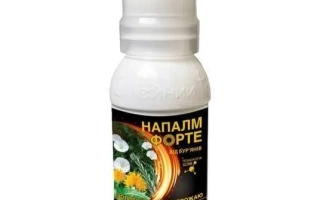
Napalm Forte
Шанхай Агрочайна Інтернешнел Трейд Ко., Лтд., Шанхай, Китай.
066 11 offers
5.22 €per 1 l ≈ 267 ₴




See also
Often considered together with this product



Tomigan 250
F.A.GAN Chemical Manufacturers Ltd. Israel, member
01.6K 5 offers
20.18 €per 1 l ≈ 1 034 ₴

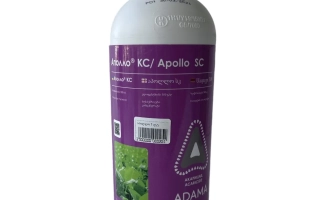
Apollo
Ірвіта Плант Протекшн,Н.В.,член групи компаній Мактешим – Аган Індастріз, Ізраїль
066 10 offers
38.18 €per 1 l ≈ 1 956 ₴
Recently viewed
Products you’ve viewed on this site
Reviews · 0