

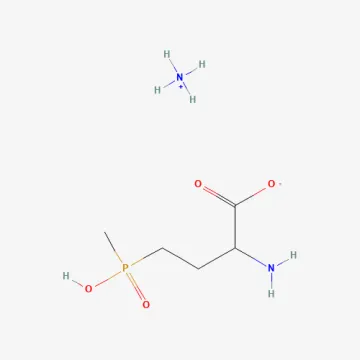
Description
Mode of action
Glufosinate-ammonium is a broad-spectrum, non-selective herbicide belonging to the phosphinic acid chemical class.
The primary mechanism of action involves the inhibition of the glutamine synthetase enzyme, which is essential for nitrogen metabolism in plants.
Blocking this enzyme causes a rapid accumulation of ammonia, which leads to the destruction of chloroplasts and the cessation of photosynthesis within plant tissues.
Unlike systemic herbicides that move slowly through the plant, glufosinate acts primarily as a contact herbicide with limited translocation, causing rapid necrosis.
The visible effects of the application, such as yellowing and browning, appear on the treated green parts of the weeds within a few days.
What it targets
This substance effectively controls a wide range of annual and perennial broad-leaved weeds and grasses in various agricultural settings.
It is widely utilized as a desiccant for various crops, helping to dry out green plant material before harvesting to reduce moisture content in seeds.
Used extensively in orchards, vineyards, and plantation crops to manage weed growth around the base of trees or vines without causing lasting soil harm.
It serves as a key tool for managing herbicide-resistant weed populations, providing an alternative to common glyphosate-based programs.
It is specifically applied in crops genetically modified to express resistance, allowing for over-the-top application during the growing season.
Rates and timing
Application rates for glufosinate-ammonium are determined by the stage of weed growth, density of the vegetation, and the specific cultivation goals.
Timing is critical when using the substance as a desiccant, requiring precise monitoring of crop maturity to ensure quality while achieving efficient drying.
High-quality spray coverage is essential, as the herbicide's contact nature requires the solution to wet the foliage thoroughly for optimal results.
Treatments are most effective when weeds are actively growing and environmental conditions, such as temperature and humidity, favor plant metabolism.
Agricultural professionals must adhere strictly to label recommendations regarding dosage and water volume to prevent failures or environmental waste.
Restrictions
Because it is a non-selective herbicide, extreme caution is required to prevent spray drift from reaching non-target crops or surrounding vegetation.
Strict safety precautions must be followed, including the use of appropriate personal protective equipment (PPE) during handling and mixing.
The substance exhibits low persistence in the soil, as it is rapidly broken down by microbial activity, preventing significant residual effects on future crops.
Operations should be avoided during high wind conditions to prevent off-target movement of the herbicide spray droplets.
- Maintain all spray equipment to ensure uniform droplet distribution.
- Follow pre-harvest interval (PHI) requirements carefully.
- Prevent runoff into local waterways and environmental sensitive zones.
Regulatory
Status in the European Union
Not approved in the EU
- CAS number
- 77182-82-2
- Category (EU)
- HB - Herbicide
- Approved from
- 01.10.2007
- Approval until
- 31.07.2018
- ADI
- 0.021 mg/kg bw/day
- ARfD
- 0.021 mg/kg bw
- AOEL
- 0.0021 mg/kg bw/day
Hazard classification (CLP)
Acute Tox. 4 - H302Acute Tox. 4 - H312Acute Tox. 4 - H332Repr. 1B - H360FDSTOT RE 2 - H373
EU legislation
EU status is for reference only and does not replace national registration in your country.
Reference
Connections · Glufosinate-ammonium
Most often together:
Marketplace
Products · 17


GALANT, RK (ammonium glyphosate, 150 g/l)
Fabrika Agrokhimikatov
Herbicides
0
0
13 offers
0.7 €per 1 l
Buy


Organic-mineral fertilizer «Natural amino acids with enzymatic hydrolysis»
ELITE TRADE, LLC
Fertilizers
0
0
No offers
—
Details