


Last Treatment Interval, Days
1
By type of action
Systemic herbicide
By Mode of Action
Selective herbicide
By Application Timing
Pre-emergence herbicide
Your mark
2 votes
100% positive ratings
Store offers · 30 from 7 stores
30 offers in 7 stores — from 0.42 € per 1 l.
Available at: agro-plus-com-ua · avrora-cn-ua · bigmart-net-ua · budzona-net-ua · feel-good-dp-ua · m-professional-com-ua · vistamarket-in-ua
Prices are collected automatically from store websites and converted at the current exchange rate. Check the price and availability on the store website before ordering.
About product
A reliable soil-applied herbicide for annual weed control, ensuring a clean start for corn, soybean, and sunflower crops.
Description
A robust soil shield for corn and soybeans
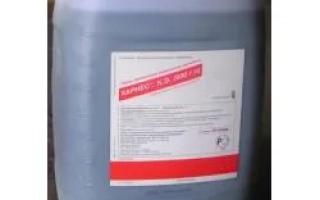
"Harness New" by Monsanto is a staple in soil-applied weed control, favored by agronomists who prioritize field cleanliness from the very beginning of the growing season. In the competitive environment of early plant development, this herbicide gives crops a decisive head start by neutralizing weed pressure before it even manifests.
Field Application and Strategy
The product acts as a pre-emptive strike, creating a protective barrier in the topsoil that prevents the germination of most annual grasses and broadleaf weeds. Key application scenarios include:
- Corn and Sunflower: Pre-plant or pre-emergence application is the standard practice here. It effectively eliminates the first flush of weeds when mechanical weeding is not yet feasible.
- Soybeans: The herbicide demonstrates excellent selectivity, ensuring crop safety while maintaining high efficacy across various soil types.
Technical Performance
The active ingredient, acetochlor (from the chloroacetamide family), is a systemic tool absorbed by weed seedlings to inhibit cell division. Because it is a soil-applied herbicide, it requires adequate soil moisture for activation. With a flexible application rate of 2.0 to 3.0 L/ha, agronomists can tailor their strategy based on local weed density and soil characteristics.
Available as an emulsifiable concentrate, "Harness New" is easy to prepare for tank mixes, ensuring even coverage and reducing nozzle clogging. Its selective nature ensures the main crop remains healthy while the chemical barrier maintains long-term control, effectively reducing the need for multiple post-emergence interventions.
Composition
Active ingredients
- Acetochlor гербицид Хлорацетамиды (Производные аминокислот)
Application
Used on crops
Against weeds
Specifications
| Last Treatment Interval, Days | 1 |
|---|---|
| By type of action | |
| By Mode of Action | |
| By Application Timing | |
| By application method | |
| Form of the preparation | |
| Application rate | From 2.0 - 3.0 L/ha |
| Catalog | Catalog → Herbicides, Desiccants |
| Manufacturer | MONSANTO |
| Country | USA |
No reviews yet. Be the first to share your experience.
Alternatives
Herbicides, Desiccants · similar preparations



Acetogran 900
F.A.GAN Chemical Manufacturers Ltd. Israel, member
01.4K 4 offers
7.96 €per 1 l ≈ 406 ₴

See also
Often considered together with this product




Recently viewed
Products you’ve viewed on this site
Reviews