

SKU #73550
·
65 views
TAURIC
Feijoa
User rating
0 votes0% positive reviews
No ratings yet — be the first.
Exotic Cultures
Feijoa
Ripening Period (days from flowering to harvest)
150-180 days
Fruit Weight
30-50 g, 50-70 g
Fruit Shape
Oval
About product

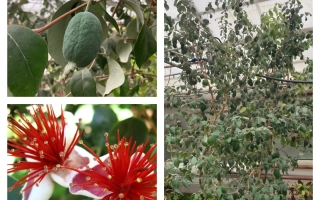
A consistently yielding feijoa variety featuring large fruits with a distinctive pineapple flavor profile.
Exotic Cultures
Feijoa
Ripening Period (days from flowering to harvest)
150-180 days
Fruit Weight
30-50 g, 50-70 g
Fruit Shape
Oval
Description
Breeding Profile and Genetics
The 'Tavricheskaya' variety is the result of long-term breeding efforts at the Nikitsky Botanical Gardens (NBS-NNTS RAS). In the southern subtropical climate, this hybrid has established itself as one of the most consistent in terms of productivity and fruit quality. The genetics of the variety are focused on achieving a commercial yield with distinct organoleptic properties, which is critical for industrial feijoa cultivation.
Technical Fruit Specifications
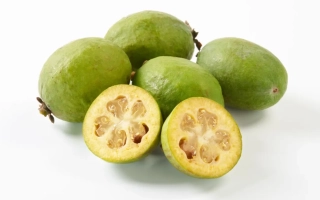
Morphological analysis of 'Tavricheskaya' fruits demonstrates an optimal balance for fresh market supply:
- Weight and Grading: Average weight ranges from 30 to 70 grams. This variance depends on the intensity of agricultural practices and water availability during the fruit-filling stage.
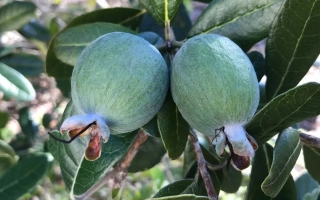
- Morphology: Stable oval shape, which minimizes the percentage of substandard produce during sorting.
- Skin: Dense, green peel that ensures high transportability and storage shelf life.
- Flavor Biochemistry: The flesh features a pronounced aroma with characteristic pineapple and strawberry notes, driven by a high concentration of essential oils and organic acids.
Biological Cycle and Agrotechnics
A critical parameter of this variety is the length of the growing period: 150–180 days from flowering to technical maturity. For agronomists, this implies a strict reliance on the cumulative active temperatures (GDD) of a specific region. The long ripening period requires precise soil moisture management during summer, as the final 30–40 days are essential for weight gain and the development of the flavor profile.
Practical application of the 'Tavricheskaya' variety is recommended for regions with long frost-free periods. Its stable yields and resilience against local pathogens make this hybrid a foundational solution for intensive feijoa orchards in southern zones.
Specifications hover over for a hint about the specification
| Exotic Cultures | |
|---|---|
| Ripening Period (days from flowering to harvest) | 150-180 days |
|
Fruit Weight
Fruit Weight
Tomato fruits are classified by weight as: very small — less than 20 grams; small — 20 — 50 grams; medium — 50 — 100 grams; large — 100 — 200 grams; very large — more than 200 grams. |
30-50 g, 50-70 g |
|
Fruit Shape
Fruit Shape
Modern tomato varieties have a diverse fruit shape: flat, flat-round, round, oval, elongated-oval, pear-shaped, plum-shaped, cube-shaped, and cylindrical. On poorly fertile soils and under unfavorable growing conditions, tomato fruits may take on a more rounded shape. |
|
| Rind Color | |
| Flavor | |
| Registration year | 2019 |
| Catalog | Catalog → Feijoa |
| Legal data | |
| Country | Russia |
Store offers
Prices are updated on loadLoading offers…
Aggregator catalog: prices are collected automatically from store websites, normalized by AI and converted at the current exchange rate. Before ordering, confirm the price and availability on the store's website. This block is not indexed by search engines — the data is loaded after the page opens.
Not yet комментариев. Be the first!


See also
Often considered together with this variety






Recently viewed
Products you’ve viewed on this site
Reviews · 0