

SKU #73551
·
69 views
September
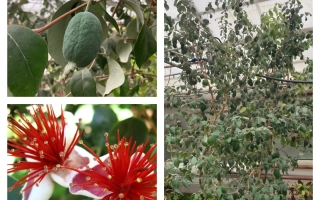
Feijoa
User rating
0 votes0% positive reviews
No ratings yet — be the first.
Exotic Cultures
Feijoa
Registration year
2017
About product

An early-ripening variety designed for streamlined harvesting and market entry.
Exotic Cultures
Feijoa
Registration year
2017
Description
Strategic Early Harvesting in Subtropical Orchards
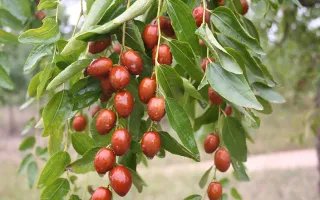
The 'Sentyabrskaya' variety, developed by the Federal Research Center for Subtropical Crops (RAS), is specifically tailored for commercial orchards focused on early-market delivery. By prioritizing early fruit maturation, this variety allows growers to secure harvests before the onset of autumn temperature drops, effectively mitigating frost-related losses.
Practical Applications for Growers
- Logistical Efficiency: Early ripening provides a distinct competitive advantage, enabling producers to enter the market ahead of bulk imports and capture higher price points.
- Orchard Management: Integrated into larger plantation schemes, this variety serves as a key component for staggering harvesting periods, which optimizes labor allocation and machinery usage.
- Climate Adaptation: Well-suited for the subtropical conditions of Georgia, the variety responds predictably to standard irrigation and fertilization regimens, making it a reliable choice for professional orchardists.
The practical appeal of 'Sentyabrskaya' lies in its ability to bridge the gap between niche exotic demand and large-scale agricultural reliability. For successful cultivation, standard subtropical practices—such as soil moisture management and pest control—are essential. By adopting this variety, farm managers can transition from unpredictable seasonal harvesting to a streamlined, business-oriented production cycle.
Specifications
| Exotic Cultures | |
|---|---|
| Registration year | 2017 |
| Catalog | Catalog → Feijoa |
| Legal data |
Show · 2
|
| Country | Georgia |
Store offers
Prices are updated on loadLoading offers…
Aggregator catalog: prices are collected automatically from store websites, normalized by AI and converted at the current exchange rate. Before ordering, confirm the price and availability on the store's website. This block is not indexed by search engines — the data is loaded after the page opens.
Not yet комментариев. Be the first!


See also
Often considered together with this variety






Recently viewed
Products you’ve viewed on this site
Reviews · 0