


SKU #4685
·
349 views
Weisse Yuterborger
Currant
User rating
1 vote100% positive reviews
No ratings yet — be the first.
Type of Sort
Red Blackcurrant
About product

Western European variety of medium ripening period of unknown origin. Since 1959, it has been included in the State Register of selection achievements approved for use in the Northern, Northwestern, Volga-Vyatka, and Eastern Siberian regions. Medium-sized, spreading, dense, hemispherical bush. Growing shoots have a dull anthocyanic coloration at the top. Characteristically, long glandular hairs a…
Type of Sort
Red Blackcurrant
Description
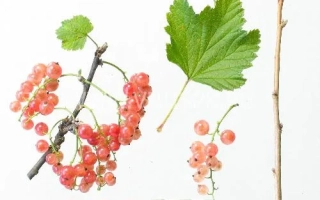
Western European variety of medium ripening period of unknown origin. Since 1959, it has been included in the State Register of selection achievements approved for use in the Northern, Northwestern, Volga-Vyatka, and Eastern Siberian regions.
Medium-sized, spreading, dense, hemispherical bush. Growing shoots have a dull anthocyanic coloration at the top. Characteristically, long glandular hairs are present. Woody shoots are thick, curved, brittle, grayish in color. Buds are large, on a narrow pedicel, arranged parallel to the shoot.
Leaves are dense, rough, dark green, large, slightly concave, with a strongly elongated central lobe. Lateral lobes are close together, basal lobes are weakly developed. Teeth along the edge are large, serrated. The upper surface of the leaf blade is sparsely covered with glandular hairs, while the lower surface has a medium density of hairs. Leaf base is rounded.
Flowers are cup-shaped. Sepals are greenish with numerous light-purple veins, overlapping to form a continuous ring. Petals are round and small. The perianth tube is very weakly developed. Flowering period is medium. Inflorescences are of medium length (10 cm), dense, containing 8–20 berries. The peduncle is medium, thin, hairy, and not brittle.
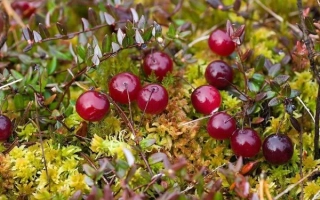
Berries are fairly large (more than 1.0 cm in diameter, weighing 0.6 g), round or slightly flattened at the poles, light cream-colored, nearly colorless, containing 5–6 small seeds. Calyx is round. Taste is moderately acidic and pleasant. Berries are suitable for fresh consumption and processing. Chemical composition of berries: dry matter — 15.2%, total sugars — 7.8%, titratable acidity — 2.5%, ascorbic acid — 38.0 mg/100 g. They are characterized by high content of pectin and P-active substances.
High-yielding variety (7–8 kg/plant), medium self-fertility, medium winter hardiness, medium resistance to anthracnose and septoria, susceptible to damage by blackberry bud moth, gooseberry sawfly, and red gall aphid.
Advantages of the variety: berries do not drop off or lose flavor easily.
Disadvantages of the variety: spreading bush form.
Crop & resistance
Crop
Specifications
| Type of Sort | |
|---|---|
| Catalog | Catalog → Currant |
Store offers
Prices are updated on loadLoading offers…
Aggregator catalog: prices are collected automatically from store websites, normalized by AI and converted at the current exchange rate. Before ordering, confirm the price and availability on the store's website. This block is not indexed by search engines — the data is loaded after the page opens.
Not yet комментариев. Be the first!
Alternatives
Currant saplings · similar varieties




See also
Often considered together with this variety




Recently viewed
Products you’ve viewed on this site
Reviews · 0