


SKU #56115
·
47 views
TAGANAY
Corn
User rating
0 votes0% positive reviews
No ratings yet — be the first.
Ripening
90-100 days
Hybrid Type
Three-line hybrid
Use Direction
Grain, Silage
Registration year
2022
About product

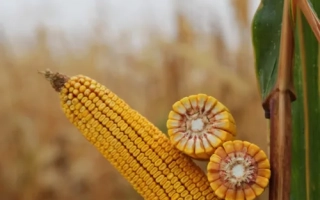
Taganay is a very early three-line hybrid corn (Zea mays L.) intended for cultivation as grain or silage. It is distinguished by a short growing period of approximately 104-105 days, allowing for harvest within a compressed timeframe. The hybrid is characterized by high yield: in the Far East region, the average grain yield reaches 57.7 centners per hectare, with maximum yields up to 110.9 centner…
Ripening
90-100 days
Hybrid Type
Three-line hybrid
Use Direction
Grain, Silage
Registration year
2022
Description
Taganay is a very early three-line hybrid corn (Zea mays L.) intended for cultivation as grain or silage. It is distinguished by a short growing period of approximately 104-105 days, allowing for harvest within a compressed timeframe. The hybrid is characterized by high yield: in the Far East region, the average grain yield reaches 57.7 centners per hectare, with maximum yields up to 110.9 centners per hectare. The grain moisture content at harvest is about 25%, facilitating storage and processing. For silage use in the Volga-Vyatka region, the average yield reaches 116.6 centners per hectare with dry matter content of 32.7%. The hybrid Taganay demonstrates good adaptability to various climatic conditions, confirmed by its inclusion in the state registry in several regions of Russia. Due to its characteristics, it is suitable for intensive farming and can be used both in grain and silage production, ensuring stable and high yields. To protect Taganay corn crops from weeds, the use of post-emergence systemic herbicides is recommended, which effectively control a broad spectrum of annual broadleaf weeds, including those resistant to 2,4-D. These products contain the active ingredient trifensulfuron-methyl and are available in the form of water-dispersible granules. When applying herbicides, it is important to follow compatibility recommendations with other plant protection products, especially avoiding mixing with organophosphorus insecticides and maintaining a minimum interval of 14 days between applications.
Crop & resistance
Crop
Specifications hover over for a hint about the specification
| Ripening | 90-100 days |
|---|---|
| Hybrid Type | |
|
Use Direction
Use Direction
Dual-purpose hybrids: for silage and grain in all growing regions. These are "stay-green" type hybrids, meaning the plants remain green for a longer period. However, this does not affect the sugar, cellulose, and hemicellulose content, nor the degree of lignification of the plant... |
|
| Registration year | 2022 |
| Catalog | Catalog → Corn |
| Legal data |
Show · 14
|
| Country | Russia |
Store offers
Prices are updated on loadLoading offers…
Aggregator catalog: prices are collected automatically from store websites, normalized by AI and converted at the current exchange rate. Before ordering, confirm the price and availability on the store's website. This block is not indexed by search engines — the data is loaded after the page opens.
Not yet комментариев. Be the first!
Alternatives
Maize seeds · similar varieties






See also
Often considered together with this variety






Recently viewed
Products you’ve viewed on this site
Reviews · 0