


SKU #55868
·
33 views
Maize OM 136
Corn
User rating
0 votes0% positive reviews
No ratings yet — be the first.
FAO
90–1240
Ripening
75-80 days, Mid-early ripening
Hybrid Type
Hybrid
Kernel Type
Flint
About product

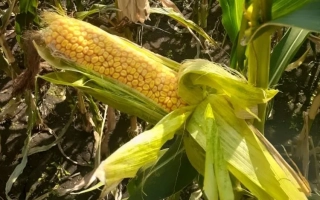
A robust medium-early flint hybrid designed for high-quality industrial processing and versatile feed applications.
FAO
90–1240
Ripening
75-80 days, Mid-early ripening
Hybrid Type
Hybrid
Kernel Type
Flint
Description
Field Performance of OM 136
For those managing maize production, the OM 136 hybrid represents a balance between biological reliability and industrial efficiency. Developed by the All-Russian Research Institute of Maize and SSP "Kukuruz," this hybrid is engineered to perform consistently across various soil types. With a maturity window of 75–80 days, it fits perfectly into a medium-early harvesting schedule, allowing operators to optimize machinery utilization and manage post-harvest grain handling with ease.
Operational and Technical Insights
- Disease Resistance: The plant exhibits significant resistance to Fusarium, rot, and various viral diseases. This natural durability reduces the reliance on intensive fungicide applications, lowering the overall cost of production per hectare.
- Grain Characteristics: The flint-type grain is dense and high-quality, making it an excellent candidate for industrial processing and food production, while remaining a top-tier option for animal feed.
- Harvesting and Maintenance: OM 136 is optimized for modern harvesting equipment. The grain threshes cleanly, reducing mechanical wear on the combine harvester and minimizing moisture-related drying costs, which directly improves the bottom line.
Economic Efficiency
The versatility of OM 136 is its greatest operational asset. By covering multiple usage directions—from industrial raw material to feed—the operator gains a buffer against market fluctuations. Whether you are running a large-scale commercial farm or specialized food production, the predictability of this hybrid ensures that your investment in inputs results in a reliable output. It does not require specialized handling, making it a low-maintenance, high-reward choice for any farming operation.
Crop & resistance
Crop
Disease resistance
Specifications hover over for a hint about the specification
|
FAO
FAO
Corn hybrids are classified by maturity groups and by the FAO number. All corn hybrids are distributed according to the FAO scale. Under Central European conditions, a difference of 10 FAO units between hybrids results in a 1-2 day difference in their maturity. The higher the FAO... |
90–1240 |
|---|---|
| Ripening | 75-80 days, Mid-early ripening |
| Hybrid Type | |
|
Kernel Type
Kernel Type
Dent corn (Zea mays indentata) — Large, elongated, flat kernels. The endosperm is horny on the sides of the kernel, mealy in the center and at the top. A depression forms at the top of the kernel upon ripening. Dent corn is the most widely cultivated group among others. Plants ty... |
|
|
Use Direction
Use Direction
Dual-purpose hybrids: for silage and grain in all growing regions. These are "stay-green" type hybrids, meaning the plants remain green for a longer period. However, this does not affect the sugar, cellulose, and hemicellulose content, nor the degree of lignification of the plant... |
|
| Registration year | 2022 |
| Catalog | Catalog → Corn |
| Legal data |
Show · 2
|
| Country | Russia |
Store offers
Prices are updated on loadLoading offers…
Aggregator catalog: prices are collected automatically from store websites, normalized by AI and converted at the current exchange rate. Before ordering, confirm the price and availability on the store's website. This block is not indexed by search engines — the data is loaded after the page opens.
Not yet комментариев. Be the first!
Alternatives
Maize seeds · similar varieties








See also
Often considered together with this variety





Recently viewed
Products you’ve viewed on this site
Reviews · 0