


SKU #3999
·
297 views
Sweet cherry Altana
Cherry, Sour Cherry
User rating
0 votes0% positive reviews
No ratings yet — be the first.
Type of Sort
Faux Cherry
Store offers · 2 from 2 stores
Prices are updated on loadLoading offers…
Available at: БаТаня · Наша Дача · Sadim · Ycadba
Aggregator catalog: prices are collected automatically from store websites, normalized by AI and converted at the current exchange rate. Before ordering, confirm the price and availability on the store's website. This block is not indexed by search engines — the data is loaded after the page opens.
About product

This variety was developed at the Buryat Fruit and Berry Experimental Station by E.Z. Badmaev, Yu.S. Bolotov, S.P. Vaulina, E.G. Sokratova, and D.A. Markova through selection among seedlings from open pollination of selected form 3-15-52 of woolly blackberry. Included in the State Register in 2005. Medium-height bush with a rounded crown. Bark on main branches is gray with a brownish-green tint,…
Type of Sort
Faux Cherry
Description
This variety was developed at the Buryat Fruit and Berry Experimental Station by E.Z. Badmaev, Yu.S. Bolotov, S.P. Vaulina, E.G. Sokratova, and D.A. Markova through selection among seedlings from open pollination of selected form 3-15-52 of woolly blackberry. Included in the State Register in 2005.
Medium-height bush with a rounded crown. Bark on main branches is gray with a brownish-green tint, flaking. Shoots are slender, straight, gray-green, densely hairy, with small pale-yellow stipules. Leaves are small, broadly oval, slightly pointed, dark green, wrinkled. Leaf blade slightly concave, with a rounded base, serrated margins, densely hairy on the underside. Stipules are medium-sized, lobed. Petiole is short, brownish-green. Flowers are small, pinkish.
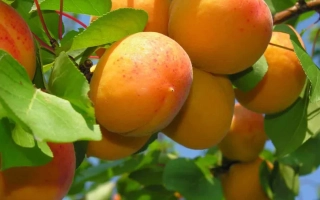
Fruits are small (2.0-2.3 g), dark red, round, with a slight depression at the base, with a barely noticeable seam. Stem is very short and easily separates from the branch. Skin has weak woolly hairs. Flesh is red, tender, juicy. Juice is pink. Taste is slightly sour-sweet, good. Stone is medium-sized, oval. Transportability is weak. It contains 12.3-14.1% soluble solids, 8.0-10.0% sugars, 0.5-1.75% acids, up to 12.8 mg/100g ascorbic acid, and up to 153.9 mg/100g vitamin P. Fresh fruit taste rating is 5 points, compote rating is 4.1 points.
Winter hardiness is medium. Heat and drought resistance are medium. Susceptibility to Clasterosporium is very low (0.5 points). Average yield is 3.5 kg, maximum 4.7 kg per bush.
Advantages of the variety: good fruit flavor, high resistance to fungal diseases.
Disadvantages: in snowless winters in Buryatia, bushes require soil covering.
Crop & resistance
Crop
Disease resistance
Specifications
| Type of Sort | |
|---|---|
| Catalog | Catalog → Cherry, Sour Cherry |
Not yet комментариев. Be the first!
Alternatives
Cherry saplings · similar varieties


See also
Often considered together with this variety




Recently viewed
Products you’ve viewed on this site
Reviews · 0