


SKU #4021
·
309 views
Vuzovskaya
Cherry, Sour Cherry
User rating
0 votes0% positive reviews
No ratings yet — be the first.
Type of Sort
Steppe Cherry
About product

Variety selected by S.G. Sukhotskaya and N.I. Barsukov (Omsk State Agrarian University). Obtained through selection among seedlings of steppe cherry. Included in the State Register for the West Siberian region in 1991. Bush low-growing, height up to 150 cm, crown diameter up to 190 cm. Crown shape oval-umbrella, medium density. Bears fruit on last year's growth, partially on cluster branches. Bar…
Type of Sort
Steppe Cherry
Description
Variety selected by S.G. Sukhotskaya and N.I. Barsukov (Omsk State Agrarian University). Obtained through selection among seedlings of steppe cherry. Included in the State Register for the West Siberian region in 1991.
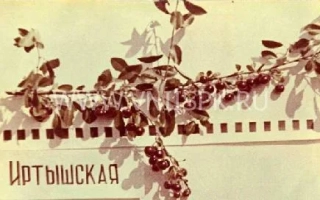
Bush low-growing, height up to 150 cm, crown diameter up to 190 cm. Crown shape oval-umbrella, medium density. Bears fruit on last year's growth, partially on cluster branches. Bark on main branches smooth, gray. Shoots thin, slightly curved, reddish, bare. Stipules numerous, gray, medium-sized. Leaves small, narrow, boat-shaped, elongated-oval, apex short-pointed. Leaf margin serrated, stipules short, with two glands. Flowers rose-like, white, medium-sized. Average number of flowers per bud 3.2.
Fruits small, average fruit weight 1.5 g, maximum 2.3 g, dark red, round-conical, flattened on sides, shiny, attractive. Pedicel long, attachment to branch strong, easily detaches from pedicels during harvest. Flesh juicy, juice red, sweet-sour flavor. Stone small, occupies up to 11% of fruit flesh, rounded, pointed, smooth. Fruits contain dry matter — 11.7%, sugars — 6.4%, acids — 1.4-1.8%, vitamin C — up to 20.6-44 mg/100g. Taste rating of fresh fruits 3.7-3.9; compote 4.3 points.
Early fruiting variety. Start of fruiting for seedlings from green cuttings on the 3rd year after planting in the garden. Fruits ripen in the 2nd-3rd decade of July. Self-sterile, pollinators: Novoseletskaya and other steppe cherry varieties. Winter hardiness satisfactory. Unlike most steppe cherry varieties, leaves turn bright yellow instead of brown before leaf fall. Average yield 3.6-4.2 t/ha, maximum up to 17.0 t/ha. Recommended planting scheme 4 x 1 m.
Advantages of the variety: early fruiting, attractive fruits with good technological properties, easy fruit detachment, good rooting of green cuttings.
Disadvantages of the variety: medium winter hardiness (at -40°, frost resistance level reaches 2.5 points); relatively small fruits.
Crop & resistance
Crop
Specifications
| Type of Sort | |
|---|---|
| Catalog | Catalog → Cherry, Sour Cherry |
Store offers
Prices are updated on loadLoading offers…
Aggregator catalog: prices are collected automatically from store websites, normalized by AI and converted at the current exchange rate. Before ordering, confirm the price and availability on the store's website. This block is not indexed by search engines — the data is loaded after the page opens.
Not yet комментариев. Be the first!
Alternatives
Cherry saplings · similar varieties



See also
Often considered together with this variety


Recently viewed
Products you’ve viewed on this site
Reviews · 0