


SKU #4017
·
594 views
Altayskaya Lastochka
Cherry, Sour Cherry
User rating
0 votes0% positive reviews
No ratings yet — be the first.
Type of Sort
Steppe Cherry
Store offers · 4 from 2 stores
Prices are updated on loadLoading offers…
Available at: Лучший Сад · Сады Семирамиды
Aggregator catalog: prices are collected automatically from store websites, normalized by AI and converted at the current exchange rate. Before ordering, confirm the price and availability on the store's website. This block is not indexed by search engines — the data is loaded after the page opens.
About product

Selected from seedlings of steppe cherry at the Siberian Institute of Horticulture named after M.A. Lisavenko. Introduced into the State Register in 1985. Authors: G.I. Subbotin, M.D. Kalinina. Regionalized in Altai Krai and serves as a control variety. Medium-sized, multi-stemmed bush, up to 160 cm tall, with a compact, raised, rounded, dense crown. Bark of branches dark brown with a reddish tin…
Type of Sort
Steppe Cherry
Description
Selected from seedlings of steppe cherry at the Siberian Institute of Horticulture named after M.A. Lisavenko. Introduced into the State Register in 1985. Authors: G.I. Subbotin, M.D. Kalinina. Regionalized in Altai Krai and serves as a control variety.
Medium-sized, multi-stemmed bush, up to 160 cm tall, with a compact, raised, rounded, dense crown. Bark of branches dark brown with a reddish tint, smooth, with few lenticels. Shoots straight, brown, slender, with short internodes. Buds conical, blunt. Leaves medium-sized, lanceolate, base rounded-ovate, apex acuminate. Leaf blade smooth, dark green, wavy, finely toothed, double-lobed. Petiole green, stipules yellow, barely noticeable, absent bracts. Flowers small, 2-5 per cluster, rose-white, 1.5-1.7 mm in diameter, petals oval, 4-5 x 7-6 mm, buds rose-colored, sepals 3-4 x 4-5 mm, oval.
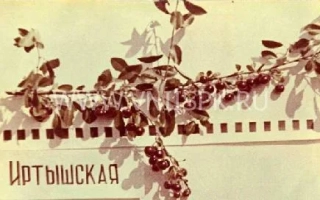
Fruits round, symmetrical, 11 mm high, 13 mm wide, flattened at the top, average weight 2.8 g, single-colored, dark red. Flesh dense, juicy, dark red. Juice intensely colored. Pedicel short, 20-25 mm, thin 1.5-2 mm. Fruit flavor sour-sweet. Pedicel attachment to fruit firm. Fruits contain 14.3% dry matter, 9.2% sugars, 1.6% acids. Stone small, oval, 0.14 g.
Fruits ripen in the third decade of July, transportability medium. Shoots stop growing in the first decade of July, leaf fall ends in the first to second decade of October. Heat-tolerant, drought-resistant. Average yield per bush 3.9 kg, maximum 8.4 kg. Winter-hardy, productive, partially self-fertile. Technological — high-quality processing products (jam, compote, cocktail), resistant to coccomyces, maximum disease rating 0.5 points.
Used in breeding for high winter hardiness, productivity, and resistance to coccomyces. Best pollinators: Selyverstovskaya, Maximovskaya, Subbotinskaya, Zhelannaya.
Crop & resistance
Crop
Disease resistance
Specifications
| Type of Sort | |
|---|---|
| Catalog | Catalog → Cherry, Sour Cherry |
Not yet комментариев. Be the first!
Alternatives
Cherry saplings · similar varieties


See also
Often considered together with this variety



Recently viewed
Products you’ve viewed on this site
Reviews · 0