


SKU #3177
·
624 views
Wild cabbage Liberator F1
Cabbage
SyngentaUser rating
0 votes0% positive reviews
No ratings yet — be the first.
Plant Type
White cabbage
Maturation (seedlings)
120-130 days
Cabbage head; mass
2.0-5.0 kg
Direction
Long-term storage
Prices in stores
from8.17 €per 1000 seeds
pack from 0.44 € per 20 pcs
7 offers from 5 stores
Store offers · 7 from 5 stores
Prices are updated on loadLoading offers…
Available at: 10sotok · Агро-Якість · Agrolife · Agroshop · Bubochka · Фермер Центр · Фермер Профессионал · Our World · Дім садівника · Веснодар
Aggregator catalog: prices are collected automatically from store websites, normalized by AI and converted at the current exchange rate. Before ordering, confirm the price and availability on the store's website. This block is not indexed by search engines — the data is loaded after the page opens.
About product

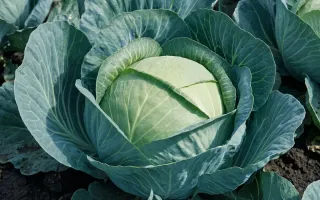
Liberator F1 cabbage — a late-maturing, high-yielding hybrid of white cabbage, developed by the Dutch company Syngenta Seeds. The vegetation period is 120–125 days, after which dense, round, white heads weighing 3–5 kg form. The plant is characterized by strong growth and resistance to fusarium, providing reliable protection against diseases and pests. The hybrid is suitable for storage, processin…
Plant Type
White cabbage
Maturation (seedlings)
120-130 days
Cabbage head; mass
2.0-5.0 kg
Direction
Long-term storage
Description
Liberator F1 cabbage — a late-maturing, high-yielding hybrid of white cabbage, developed by the Dutch company Syngenta Seeds. The vegetation period is 120–125 days, after which dense, round, white heads weighing 3–5 kg form. The plant is characterized by strong growth and resistance to fusarium, providing reliable protection against diseases and pests. The hybrid is suitable for storage, processing, fresh market sales, and pickling.
Liberator F1 cabbage is well-adapted to various climatic conditions, tolerating temperature fluctuations, drought, low soil nitrogen levels, and waterlogging. However, for optimal growth, moderate watering and proper agronomic practices are required, especially during planting and early development. The recommended plant density is 30–35 thousand plants per hectare. Cultivation is possible both by direct sowing in open ground and by seedling method using tray or traditional sowing techniques.
Successful cultivation of Liberator F1 cabbage depends on soil and lighting conditions. The optimal soil pH is 5.5–6.0; on acidic soils, the risk of clubroot infection increases. The hybrid requires ample light and does not tolerate shade. Best preceding crops are potatoes, root vegetables, legumes, cucumbers, and beets. For seedling cultivation, the optimal age is 3–4 fully formed leaves and a height of 8–10 cm. Seed sowing depth is 1.5–2.5 cm, and row spacing is 70 cm. This approach ensures high yield and product quality.
Liberator F1 cabbage is well-adapted to various climatic conditions, tolerating temperature fluctuations, drought, low soil nitrogen levels, and waterlogging. However, for optimal growth, moderate watering and proper agronomic practices are required, especially during planting and early development. The recommended plant density is 30–35 thousand plants per hectare. Cultivation is possible both by direct sowing in open ground and by seedling method using tray or traditional sowing techniques.
Successful cultivation of Liberator F1 cabbage depends on soil and lighting conditions. The optimal soil pH is 5.5–6.0; on acidic soils, the risk of clubroot infection increases. The hybrid requires ample light and does not tolerate shade. Best preceding crops are potatoes, root vegetables, legumes, cucumbers, and beets. For seedling cultivation, the optimal age is 3–4 fully formed leaves and a height of 8–10 cm. Seed sowing depth is 1.5–2.5 cm, and row spacing is 70 cm. This approach ensures high yield and product quality.
Video · 1 video
Suggest a video →Crop & resistance
Crop
Disease resistance
Specifications hover over for a hint about the specification
| Plant Type | |
|---|---|
|
Maturation (seedlings)
Maturation (seedlings)
By the length of the vegetation period, cabbage varieties are conditionally divided into three maturity groups: early maturing (100 — 120 days), mid-season maturing (120 — 150 days), and late maturing (more than 150 days). When sowing cabbage seeds in March — April, cabbage seedl... |
120-130 days |
|
Cabbage head; mass
Cabbage head; mass
The mass of the cabbage head depends on the variety characteristics and cultivation techniques. It can reach 10 kg and even more. |
2.0-5.0 kg |
|
Direction
Direction
Existing varieties and types of cabbage are grown for fresh consumption, long-term storage, and technical processing. |
|
|
Head / Head; shape
Head / Head; shape
The head shape depends on the cabbage variety. Thus, in white-headed, red-headed, and savoy cabbage, it is round or flat-round, in colored cabbage — compact, and in Peking cabbage — barrel-shaped. |
|
|
Storage
Storage
Depending on the variety characteristics, the storage period for heads may vary from one month for early varieties to eight months for late cabbage varieties. |
10-12 months |
| Recommended Density | 30-35 thousand pcs/ha |
| Registration year | 2010 |
| Catalog | Catalog → Cabbage |
| Manufacturer | Syngenta |
| Country | Switzerland |
Not yet комментариев. Be the first!
Alternatives
Cabbage seeds · similar varieties



See also
Often considered together with this variety







Recently viewed
Products you’ve viewed on this site
Reviews · 0