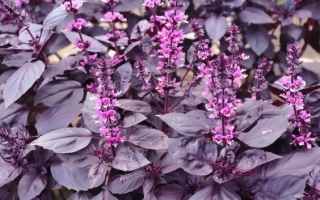
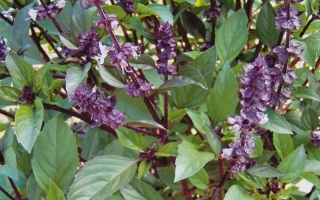
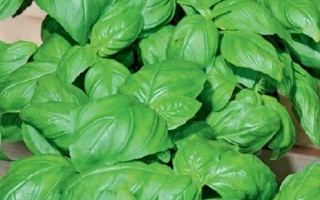
Lemon basil is a compact annual plant reaching up to 35 cm in height, distinguished by its bright lemon aroma, which makes it unique among other basil varieties. It is a hybrid of sweet basil and American basil, combining the best qualities of both types. Lemon basil features abundant foliage and looks aesthetically pleasing both in the garden bed and on the windowsill, allowing for home cultivation for continuous fresh herb use.
The leaves, young shoots, and flowers of the plant contain essential oils with a pleasant lemon flavor and aroma. Basil is rich in mineral salts and vitamins A, C, P, as well as the B complex. Thanks to its delicate taste, which initially shows a slight bitterness followed by a sweetish aftertaste, lemon basil is widely used in cooking. It is used both fresh and dried as a seasoning for salads, sauces, meat and fish dishes, as well as for flavoring beverages, cheeses, confectionery, pickling, and canning.
Growing lemon basil is not particularly difficult. Seeds are sown in late March to early April at a depth of 0.5-1 cm at a temperature of 20-25 degrees; seedlings appear within 10-15 days. Seedlings are transplanted into open ground after the last frost, with a distance of 15-20 cm between plants in a row and 60 cm between rows. The plant prefers light, humus-rich soils, warmth, light, and sufficient moisture. Care includes regular watering, soil loosening, weeding, and fertilization. Thanks to these qualities, lemon basil is an excellent addition to the microgreen collection and a versatile aromatic herb for various culinary purposes.