
Tobacco leaf curl virus
Polerovirus tndv
Description
Symptoms
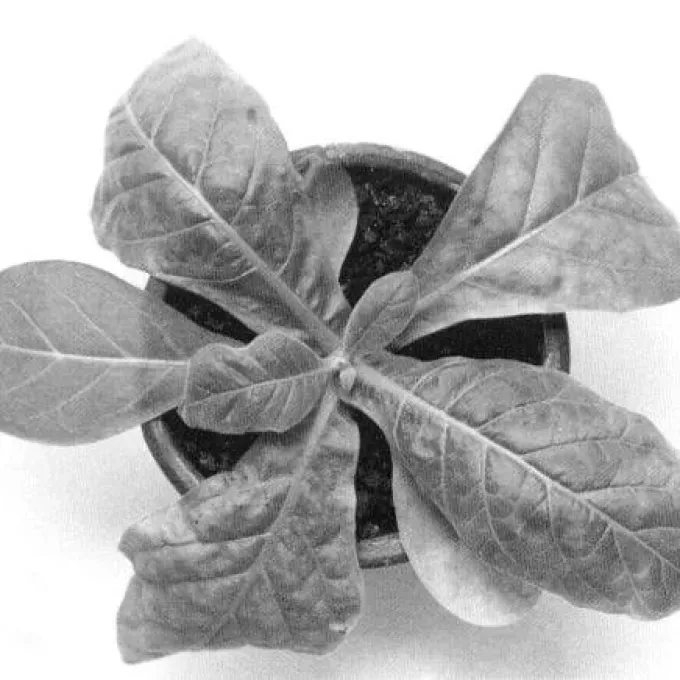
Characteristic symptoms include distinct curling and rolling of leaves, often accompanied by thickening and distortion of the leaf veins.
Affected plants exhibit significant growth retardation, including shortened internodes, which gives the plant a compact, stunted appearance.
Chlorosis, or yellowing of the foliage, is commonly observed, particularly in younger, developing leaves near the apical meristem.
The texture of the leaves becomes stiff and brittle, significantly reducing the quality of the cured product.
- Leaf curling and deformation.
- Stunting and reduced plant height.
- Interveinal chlorosis and yellowing.
Pathogen
The Tobacco leaf curl virus, classified within the Polerovirus genus, is the causal agent of this debilitating plant disease. It is a single-stranded RNA virus.
The virus is restricted to the plant's phloem tissue, where it interferes with the translocation of photoassimilates, leading to stunted growth.
It is not transmitted mechanically via sap contact during pruning or handling, which simplifies management compared to other viral diseases.
The virus requires a persistent insect vector for transmission, which is a hallmark of the Polerovirus group biology.
Understanding the molecular mechanisms of this virus is essential for developing rapid diagnostic tools and resistant tobacco varieties.
Conditions for development
Aphids, specifically species like Myzus persicae, act as the primary vectors, acquiring the virus while feeding on infected plant tissues.
The disease spread is most aggressive during periods of hot, dry weather which favor the rapid proliferation of aphid populations.
Alternative weed hosts in the Solanaceae family serve as essential reservoirs, allowing the virus to persist from one season to the next.
Environmental stress can exacerbate symptom expression, making it difficult for plants to recover from even mild infections.
The migration of winged aphids into the field represents the critical moment for the start of an epidemic cycle.
Why it matters
The economic impact of the virus is severe, as it causes significant reductions in both leaf yield and the overall quality of the harvest.
Tobacco leaves from infected plants lack the necessary biochemical profile, including aroma and texture, required for commercial processing.
The infection destroys the structural integrity of the leaf, rendering it fragile and susceptible to damage during harvesting and curing.
Widespread outbreaks can result in total crop failure in heavily infested fields, causing massive financial losses to growers.
The presence of the virus necessitates increased expenditures on insecticide applications, which increases the cost of tobacco production.
Protection
Integrated Pest Management (IPM) focusing on strict aphid control is the most effective approach to minimize virus transmission.
Maintaining a weed-free environment around the tobacco plantation reduces the number of initial viral reservoirs in the area.
Spatial and temporal separation of planting dates can help evade the peak migration periods of vector insect populations.
Roguing, or the systematic removal and destruction of symptomatic plants, is crucial in preventing the spread of the virus within the field.
Utilizing certified virus-free seeds and planting resistant or tolerant tobacco varieties provides the most reliable long-term protection.
Discussion
No discussions yet — be the first.