
Tobacco latent virus
Tobamovirus latentabaci
Description
Symptoms
The defining characteristic of this infection is its latent nature, meaning plants can be heavily infected without exhibiting clear, definitive symptoms for long periods of time.
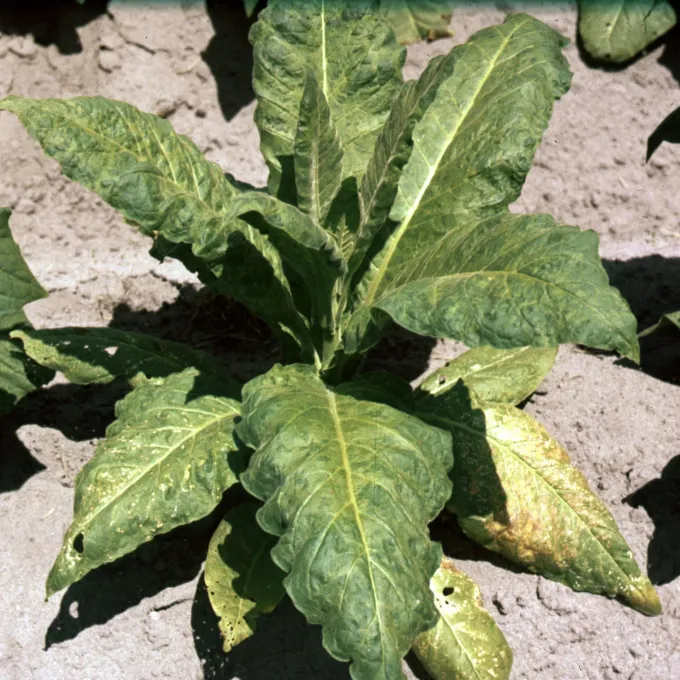
When exposed to environmental stress or during phases of rapid growth, infected plants may show subtle mottling, mild mosaic patterns, or slight leaf chlorosis. Growth retardation is frequently observed, although it may be overlooked without healthy control plants for comparison.
In cases of significant infection or secondary stress, leaf deformation and discoloration become more apparent, which can sometimes be confused with nutrient deficiencies. However, the systemic nature of the symptoms helps distinguish this viral disease from nutritional disorders.
- Mild mosaic patterns on leaves.
- Slight deformation of young shoots.
- Overall stunting of plant growth.
- Reduced photosynthetic efficiency.
- Asymptomatic presentation under ideal growth conditions.
If the plant is co-infected with other pathogens, the cumulative effect leads to severe chlorosis, necrosis, and a drastic decline in the physiological performance of the crop.
Pathogen
Tobacco latent virus (Tobamovirus latentabaci) is a plant pathogen belonging to the genus Tobamovirus. It is known for its remarkable stability and ability to persist in soil and crop debris for extended periods, remaining infectious even under harsh environmental conditions.
The virus consists of rigid rod-shaped particles. Due to its high stability, it is easily transmitted mechanically through any physical contact between infected and healthy plants, especially during routine agricultural operations.
Transmission primarily occurs via contaminated hands, tools, or clothing of field workers. Unlike many other plant viruses, this pathogen does not typically rely on insect vectors, which highlights the importance of hygiene and sanitation.
It has a broad host range, primarily infecting members of the Solanaceae family, including tobacco, tomatoes, and peppers. Seeds can serve as a primary source of infection, facilitating the long-distance spread of the pathogen.
The biological nature of this virus allows it to exist in a latent state within plant tissues, often causing no immediate or obvious symptoms, which facilitates its undetected spread throughout commercial greenhouses and fields.
Conditions for development
The spread of the virus is highly correlated with plant density and the frequency of human interaction with the crop. High humidity and repetitive manual tasks provide ideal conditions for the virus to move from plant to plant.
Optimal growing temperatures for Solanaceous crops also support the replication cycle of the virus. In greenhouse environments, the infection can rapidly proliferate, potentially impacting the entire crop cycle if sanitation is neglected.
Contaminated soil or unsterilized growing media acts as a major reservoir for the pathogen. Failure to properly remove and destroy post-harvest debris ensures that the virus persists in the field for subsequent planting seasons.
Abiotic stresses, such as fluctuating irrigation levels or temperature spikes, act as triggers that shift the virus from a dormant or latent phase to an active phase, leading to the expression of visible symptoms.
Weed species from the Solanaceae family serve as critical overwintering hosts, allowing the virus to survive between crop seasons and maintain a high level of inoculum in the environment.
Why it matters
The primary damage caused by Tobacco latent virus is the insidious reduction in yield and the degradation of product quality, which often goes unrecognized until harvest time.
Infected plants exhibit reduced vigor and poor response to fertilization, leading to significant economic losses for growers. The energy that should be directed toward fruit and biomass development is instead diverted by the viral replication process.
The virus negatively impacts the marketability of the produce, as deformities and poor color development significantly lower the commercial value of the crop. For tobacco, the biochemical quality of the leaves is severely affected, impacting processing capabilities.
Prolonged presence of the virus in a field deteriorates the overall phytosanitary quality of the land, often necessitating intensive and costly decontamination efforts to restore the site for future cultivation.
Economic losses are compounded by the need for labor-intensive removal of infected material and potential culling of large batches of plants that serve as infection hotspots.
Protection
Strict biosecurity and hygiene measures are the most effective strategies for control. All agricultural tools, trays, and equipment should be regularly disinfected with effective virucidal agents like sodium hypochlorite.
The use of high-quality, certified, and virus-free seed is the foundation of a robust disease management program. Testing planting material is essential to prevent the introduction of the virus to new areas.
Early identification and rigorous roguing (removal) of symptomatic or suspect plants help limit the mechanical spread of the virus to healthy individuals nearby.
- Regular disinfection of knives, shears, and hands.
- Cultivation of resistant or tolerant cultivars.
- Systematic weed control to eliminate alternative hosts.
- Strict adherence to crop rotation cycles.
- Thorough removal and destruction of crop residues post-harvest.
Because there are no direct chemical therapies to cure infected plants, management strategies must focus entirely on exclusion, sanitation, and the prevention of mechanical transmission.
Discussion
No discussions yet — be the first.