
Tobacco leaf curl begomovirus
Begomovirus nicotianavariati
Description
Symptoms
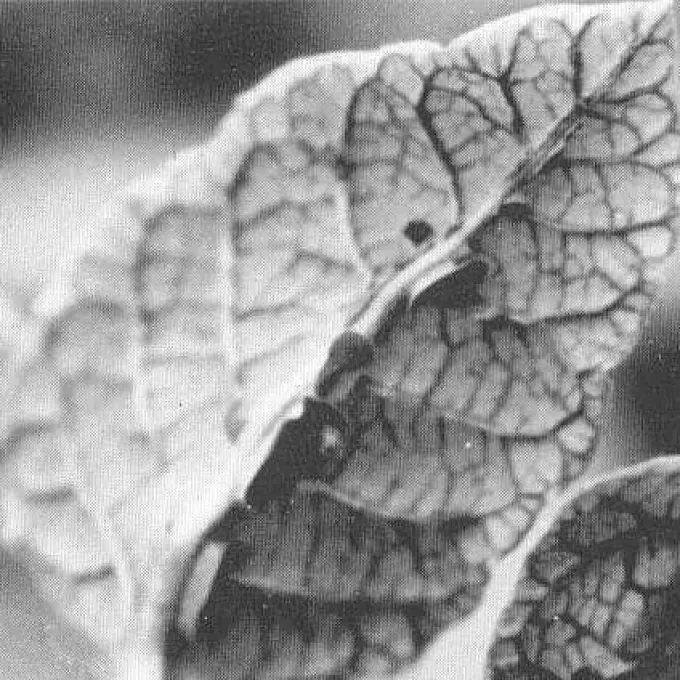
Initial infection symptoms manifest as a characteristic mosaic pattern on the leaves. The leaf blades display areas of altered pigmentation, ranging from pale green to bright yellow spots of irregular shapes.
Leaf deformation is common: blades become wrinkled, and margins may curl upward or downward. A significant reduction in growth and stunting of the entire tobacco plant is frequently observed.
Infected plants appear weak, with shortened internodes, giving the plant a stunted appearance. In severe cases, young leaves may become thread-like, significantly reducing the photosynthetic surface area.
During the reproductive phase, underdeveloped inflorescences and flower bud drop are often recorded. If infection occurs at early developmental stages, the formation of viable seeds becomes impossible.
- Interveinal yellowing (chlorotic manifestation)
- Pronounced mottling of leaf tissues
- Curling of young apical shoots
- Reduction in total plant biomass
Pathogen
The causal agent is the Begomovirus nicotianavariati, a member of the Begomovirus genus within the Geminiviridae family. It is a single-stranded DNA virus characterized by a specific genome structure typical of this viral group.
The virus primarily affects plants in the Solanaceae family, with tobacco being its main natural host. In agricultural settings, the pathogen can also persist in weed reservoirs, creating constant infection foci near fields.
A key biological feature of this virus is its narrow host specialization for specific insect vectors. The virus is not mechanically transmitted through sap or seeds; it requires a living vector for successful inoculation into the host plant.
The viral life cycle is inextricably linked to the movement and feeding behavior of its insect vectors. After ingestion, the virus undergoes an incubation period within the insect, after which the vector remains capable of transmitting the virus for its entire lifespan.
Pathogenesis mechanisms involve the suppression of the host plant's immune responses, allowing the virus to replicate efficiently within phloem tissues. This disrupts nutrient transport and leads to systemic infection throughout the entire plant.
Conditions for development
The primary vector for virus spread in tobacco fields is the tobacco or greenhouse whitefly (Bemisia tabaci). Disease development is directly correlated with the population density of this pest.
Conditions favorable for pathogen spread include high air temperatures (above 25-28 degrees Celsius) and high humidity, which facilitate the rapid reproduction of the insect vectors.
Under drought conditions or physiological stress, plants become more susceptible to viral infection. The presence of weeds along field margins increases the risk of epiphytotic outbreaks due to whitefly migration onto the tobacco crop.
Crop rotation plays a critical role, as tobacco monoculture creates ideal conditions for high infection pressure. The presence of perennial weeds allows the virus to overwinter until the start of the next season.
Inoculation occurs during brief feeding sessions of adult whiteflies on the plant leaf. The higher the pest population density, the more rapidly the virus spreads throughout the entire field area.
Why it matters
The primary damage results in a sharp decrease in raw material quality and market value. Leaves affected by the leaf curl virus become brittle, lose elasticity, and suffer from reduced aromatic properties.
The virus causes significant yield losses, often reaching 50–70% in cases of early-season infection. Plants either die completely or remain underdeveloped, failing to produce a marketable crop.
Economic losses arise not only from partial yield loss but also from the costs associated with continuous protective measures. Viral diseases require constant monitoring, which increases the production cost of tobacco.
The harm caused by the virus is exacerbated by its ability to persist in various other commercially important crops. This complicates the selection of crop rotation patterns and limits intensive farming opportunities.
Indirect harm manifests as the need for increased insecticide applications, which leads to soil contamination and disrupts the balance of natural entomophages that otherwise help regulate pest populations.
Protection
The fundamental method of control is the management of whitefly population density. The use of systemic insecticides during early tobacco development stages helps curb the primary spread of the virus.
Agrotechnical prevention is essential: maintaining physical isolation between tobacco fields and vegetable crops, which may also act as infection reservoirs.
Destruction of weeds around field perimeters and within the rows is mandatory. Weeds serve as «green bridges,» preserving the infection until insect vectors arrive.
The use of resistant tobacco varieties is the most effective defense strategy. Breeding for virus immunity minimizes losses without the need for excessive chemical intervention.
Implementing strict phytosanitary control of seeds and seedlings is highly recommended. Transplants should be grown in protected greenhouses to prevent any access by pests to young plants.
Discussion
No discussions yet — be the first.