
Tospoviruses
Tospoviridae
The causative agents are viruses belonging to the Tospoviridae family. These are unique plant viruses because they are primarily transmitted by thrips, which act as their biological vectors.
What the section contains
Tospoviruses
The disease is a systemic viral infection that affects the vascular system of the host plant. Once infected, the virus spreads through the phloem to all plant organs.
The most prominent member of this group is the Tomato Spotted Wilt Virus (TSWV). It is known for having an incredibly wide host range, infecting over a thousand species of plants.
The virus persists within the thrips vector for its entire lifespan. Larvae acquire the virus during feeding and remain infectious vectors throughout their adult stage.
Viral replication occurs within the host cells, causing severe disruption to metabolic pathways, nutrient transport, and overall growth development of the plant.
Symptoms of tospovirus infection are highly variable, making field diagnosis challenging. Leaves often exhibit chlorotic spots, ringspots, and necrotic patterns.
Leaf curling, deformation, and mosaic patterns are frequently observed. The plants often show stunted growth and a general lack of vigor due to the systemic nature of the infection.
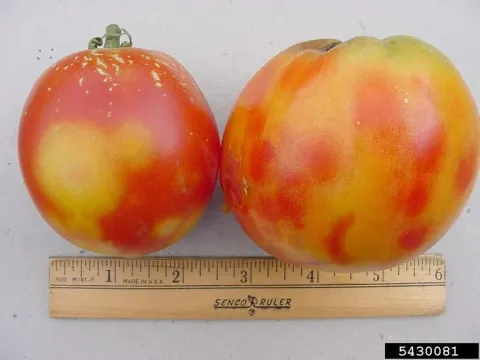
Fruits, especially tomatoes and peppers, show characteristic symptoms including spotting, uneven ripening, and surface blemishes, which renders them unmarketable.
Growing tips may wilt and die back, leading to a distorted appearance of the terminal shoots. In some cases, necrotic streaks appear along the stems.
- Ringspot symptoms on leaves.
- Necrotic spots on stems and leaves.
- Fruit deformation and discoloration.
- Stunting and growth arrest.
- Bronze foliage appearance.
The spread of tospoviruses is heavily dependent on thrips populations. Optimal development for these vectors occurs at temperatures between 25°C and 30°C.
High humidity and warm conditions facilitate the movement and reproduction of thrips, leading to rapid disease dissemination within greenhouses and open fields.
Surrounding weed populations often serve as primary reservoirs for both the virus and its insect vectors, allowing the infection to jump to nearby crops.
Lack of crop rotation and continuous cropping cycles in greenhouses provide the virus with a constant supply of susceptible hosts, keeping the infection levels high.
Plant stress, such as water deficit or extreme temperature fluctuations, can further weaken the plant's defenses and exacerbate the severity of the viral impact.
Tospoviruses cause significant economic losses globally. Infected plants cannot be cured, necessitating the removal and destruction of affected crops.
The virus severely impacts crop quality and yield. Produce showing visual symptoms like spots or deformations is rejected by markets and processors.
Early-season infections in seedling nurseries can lead to total crop failure, forcing growers to restart the entire production cycle.
The systemic nature of the disease makes it difficult to contain, as the virus can be present in symptomless plants, which act as "silent" sources of infection.
The cumulative damage includes not just the loss of fruit but also the increased labor and chemical costs associated with aggressive vector management.
Since there are no curative treatments for viral plant diseases, management is strictly focused on prevention and the suppression of insect vectors.
Rigorous control of the thrips population is the primary defense strategy. This involves the application of systemic and contact insecticides during the early stages of crop growth.
Using virus-resistant or tolerant crop cultivars is the most effective long-term solution for managing tospoviruses in high-risk areas.
Sanitation is critical: removing weeds around the perimeter of the field and eliminating infected plants immediately helps break the disease transmission cycle.
Implementing exclusion measures, such as insect-proof netting in greenhouses, significantly reduces the entry of thrips and minimizes the risk of virus introduction.