
Tobravirus
Tobravirus
Tobravirus is a genus of plant viruses that cause significant systemic infections in a wide range of agricultural and ornamental crops. The most well-known member of this group is the Tobacco rattle virus (TRV).
What the section contains
Tobravirus
The pathogen consists of two components of single-stranded RNA, which enables it to persist effectively in various environments and maintain high genetic diversity among different isolates.
Tobraviruses are classified as soil-borne pathogens because their life cycle is strictly dependent on free-living soil nematodes from the Trichodoridae family, which act as vectors.
The virus is remarkably stable, allowing it to survive for extended periods within both infested soil particles and surviving weed roots, which serve as perennial reservoirs.
Transmission occurs when nematodes feed on the roots of host plants, injecting the virus into the vascular system, after which it rapidly spreads throughout the entire plant.
The hallmark symptom of Tobravirus infection in potatoes is the development of necrotic arcs, spots, and rings inside the tuber flesh, often referred to as corky ringspot.
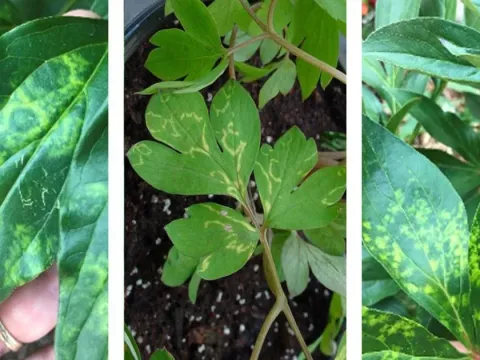
In vegetative parts of plants, the virus frequently induces mottled leaf patterns, leaf distortion, stunting, and bushy appearances in heavily infected potato plants.
Ornamental plants, including tulips and gladioli, often display broken flower patterns, flower deformation, and necrotic lesions on the leaves, reducing their aesthetic value.
Diagnosis can be challenging because early symptoms often mimic nutrient deficiencies, drought stress, or herbicide damage, requiring molecular testing for confirmation.
- Internal necrotic rings in potato tubers;
- Chlorotic mottling and leaf deformation;
- Stunted growth and reduced vigor;
- Systemic decline in plant health and quality.
The development of the disease is inextricably linked to the presence of Trichodorus and Paratrichodorus nematodes in the soil, which serve as the primary carriers.
Tobravirus thrives in light-textured soils, such as sandy or loamy soils, where nematode movement is facilitated by higher pore connectivity and moisture retention.
Soil temperature is a key factor, as nematode activity peaks during the spring, which often correlates with the most vulnerable growth stages of newly planted crops.
Long-term mono-cropping of susceptible species promotes high nematode populations, creating an ideal environment for the virus to become established and spread.
The movement of infected plant propagules, such as tubers, corms, and bulbs, remains the most significant factor in spreading the virus to previously uninfested areas.
The primary economic damage caused by Tobravirus is the substantial reduction in potato marketability due to internal tuber necrosis, which makes produce unsalable.
Systemic infection leads to decreased photosynthetic efficiency, resulting in significant yield losses and stunted crop development in the field.
Infected crops show increased susceptibility to secondary infections, particularly fungal and bacterial rots, which often lead to premature decay during storage.
For seed production facilities, a Tobravirus outbreak is catastrophic, as it can lead to the quarantine or destruction of entire batches of elite seed stock.
The persistent nature of the virus in the soil necessitates long-term management strategies, which significantly increase operational costs for affected growers.
Effective control primarily involves the application of specialized nematicides to reduce the vector populations in the soil before planting the susceptible crop.
Utilizing high-quality, virus-tested seed stock is the most important preventive measure to avoid introducing the pathogen into clean fields.
Implementing strategic crop rotation with non-host species is vital to disrupt the life cycle of the nematode vectors and reduce the overall soil viral load.
Rigorous weed control is essential, as many common weeds serve as symptomless reservoirs for the virus during the winter or between crop cycles.
Maintaining strict phytosanitary protocols, including equipment sanitation and field monitoring, helps to contain the disease and prevent its further spread.