
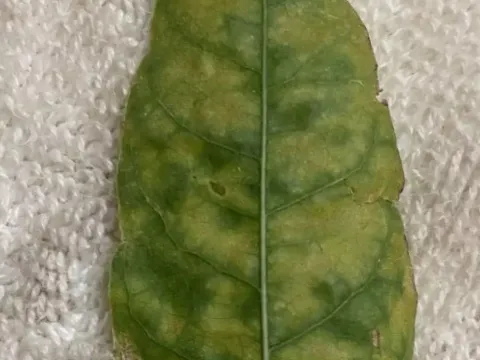
Wisteria mosaic
Potyvirus wisteriae
The causative agent of this disease is the Wisteria vein mosaic virus (WVMV), which belongs to the Potyvirus genus. It is a highly specific pathogen that primarily affects plants of the genus Wisteria.
What the section contains
Wisteria mosaic
The viral particles have a filamentous structure, which is typical for all members of the Potyviridae family. The virus persists in the tissues of the host plant, circulating throughout its vascular system year-round.
The primary mode of natural transmission is through aphids, which act as non-persistent vectors. The virus is acquired by the insect during feeding and is transmitted to the next healthy plant within seconds or minutes of contact.
Human activity is a major factor in spreading the infection. The virus can be transmitted mechanically through contaminated pruning shears, grafting knives, and other tools used during regular garden maintenance.
As with most plant viruses, there is no chemical cure for Wisteria mosaic. Once a plant is infected, the pathogen integrates into its systemic life cycle, and the host remains a permanent reservoir for the virus.
The most distinctive symptom is the development of a mosaic pattern on the leaves. These patterns often appear as intermingled light-green, yellow, and dark-green patches, which interrupt the normal leaf color.
A frequent diagnostic feature is "vein banding" or "vein clearing," where the tissues surrounding the veins become chlorotic. This creates a sharp contrast between the light-colored veins and the darker leaf blade.
Affected leaves often exhibit significant deformation, becoming curled, wrinkled, or asymmetric. This loss of normal leaf shape significantly detracts from the aesthetic value of the wisteria vine.
Stunted growth is commonly observed in infected plants. New shoots may be shorter than usual, and the overall vigor of the plant decreases, leading to a thin, sparse appearance over time.
Flowering is negatively impacted by the virus. The floral racemes become smaller, with fewer blossoms, and the vibrancy of the bloom color may be reduced, signaling the plant's weakened state.
The prevalence of aphid populations is the most critical environmental factor for the spread of Wisteria mosaic. Warm and humid conditions that favor aphid reproduction increase the risk of rapid virus transmission.
Inadequate hygiene in gardening practices is a major driver of the disease. Using the same pruning tool on multiple plants without proper sanitation between cuts allows the virus to spread effortlessly across the landscape.
Dense planting configurations increase the likelihood of virus transfer. When branches of healthy and infected plants touch, they facilitate easier movement for insect vectors, accelerating the outbreak.
Propagation using infected scion wood is the primary method of long-distance spread. When infected cuttings are used for grafting, the virus is introduced directly into the rootstock, leading to systemic infection.
Plants under environmental stress, such as improper fertilization or drought, are more susceptible to the virus. Weakened plants often show more severe symptoms than those grown in optimal conditions.
The primary harm of Wisteria mosaic is the total loss of ornamental value. Since wisterias are prized for their foliage and spectacular flowers, a virus-infected plant loses its primary reason for existence in a garden.
The disease systemically weakens the plant, making it less resilient to environmental stressors like frost, heat, and drought. Long-term infection can lead to the decline and eventual death of the vine.
For commercial nurseries, the presence of the virus is economically devastating, as it necessitates the quarantine and destruction of infected stock to prevent further transmission to healthy plants.
The disruption of photosynthetic activity due to leaf chlorosis deprives the plant of energy. This reduces the wisteria's ability to store carbohydrates, which are essential for surviving winter dormancy.
The infection poses a risk to other wisteria specimens in the vicinity. Because the virus is persistent in the tissue, the infected plant serves as a constant focal point for potential outbreaks.
Prevention is the only effective strategy. Always source wisteria plants from reputable nurseries that employ rigorous virus-testing protocols and sanitation standards.
Implement a strict aphid management program. Use appropriate insecticides or biological controls to keep vector populations under control during the spring and summer months.
Maintain high standards of tool sanitation. After pruning or grafting, disinfect all tools with a solution of 70% isopropyl alcohol or a bleach solution to prevent the mechanical transmission of the virus.
If a plant shows definitive symptoms of Wisteria mosaic, there is no way to save it. It should be promptly removed, including the root system, and disposed of by burning or burying to prevent further spread.
Ensure that your wisterias are kept in good health through balanced feeding, proper watering, and adequate sunlight. A healthy plant is better equipped to resist and recover from secondary issues caused by viral stress.