
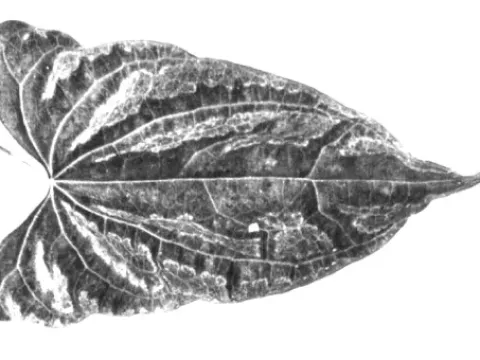
Yam mosaic virus
Badnavirus deltadioscoreae
The causative agent is Badnavirus deltadioscoreae, a virus belonging to the Badnavirus genus. It is a DNA virus characterized by a circular genome, which allows it to integrate into the host's genetic material.
What the section contains
Yam mosaic virus
The disease is systemic, meaning the virus spreads through the plant's vascular system, affecting all vital parts, including stems, leaves, and tubers.
A key biological feature of this virus is its ability to persist in a latent state within the plant tissues without showing immediate symptoms until environmental stress occurs.
Transmission of the virus primarily occurs through vegetative propagation using infected tubers, which facilitates the spread of the disease over vast distances.
Genetic analysis shows that the virus has evolved alongside its host, developing mechanisms to bypass plant defense systems and ensure long-term survival.
The most common symptom is a mosaic pattern on the leaves, appearing as a mixture of light green, yellow, and dark green patches along the veins.
Infected leaves often exhibit significant deformation, such as curling, wrinkling, or becoming unevenly shaped, which hinders efficient photosynthesis.
Affected plants show signs of overall stunted growth compared to healthy ones, with significantly thinner stems and a weaker appearance.
Chlorosis, which starts from the leaf veins and spreads outwards, is another frequent sign, leading to premature leaf drop and weakening of the plant.
In severe cases, the entire plant architecture may be altered, leading to a sprawling or prostrate habit due to the lack of structural integrity in the stems.
The virus is disseminated primarily by insect vectors such as aphids and mealybugs, which acquire the virus while feeding on infected sap and transmit it to healthy tissues.
Favorable weather conditions, specifically moderate temperatures and high humidity, lead to an increase in insect populations, which accelerates the spread of the disease.
Human activity is a major factor in transmission, particularly the reuse of contaminated pruning tools and knives without adequate disinfection.
Poor agricultural practices, such as the use of untested tuber seeds for the next growing season, remain the most significant route for disease outbreaks.
Cultivating yams in continuous monoculture without proper sanitation allows the virus to accumulate in the field and persist in plant debris and soil-borne residues.
The primary harm lies in substantial yield reduction, as the virus severely limits tuber weight, size, and nutritional quality.
The cosmetic and internal quality of the tubers is diminished, often making them unsaleable and unsuitable for local or international trade.
Infected tubers exhibit lower germination rates and vigor, which contributes to the gradual decline of the crop variety over several growing cycles.
Virus-infected plants are more susceptible to secondary infections from fungi and bacteria, which often colonize the weakened plant tissues, leading to rot.
The economic impact is profound, forcing farmers to bear the costs of replacing their entire seed stock and implementing expensive management programs.
The most effective management strategy is the use of virus-free seed tubers derived from tissue culture or meristem-tip propagation programs.
Regular field inspection is crucial, and symptomatic plants should be promptly rogued (removed and destroyed) to prevent further spread within the crop.
Integrated pest management (IPM) focusing on controlling aphid and mealybug populations is essential to reduce the rate of secondary transmission.
Strict hygiene protocols, including the disinfection of farming tools with antiviral solutions after contact with each plant, are mandatory in high-risk areas.
Crop rotation and spatial isolation of new plantations from older, potentially infected areas are recommended to lower the overall inoculum pressure.