
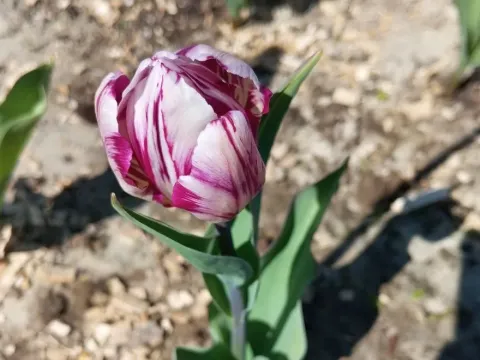
Tulip breaking virus (Potexvirus type)
Potexvirus ecstulipae
The disease is caused by Potexvirus ecstulipae, a viral pathogen specifically adapted to infect various species and varieties of tulips.
What the section contains
Tulip breaking virus (Potexvirus type)
This virus is primarily transmitted through mechanical means, often via infected sap during harvesting, trimming, or normal handling of plant parts.
Once inside, the virus undergoes systemic infection, moving through the vascular system to reside in the bulb, leaves, and reproductive organs.
The virus is notoriously stable, allowing it to survive for extended periods within the bulbs and potentially on contaminated garden tools.
As a systemic pathogen, it alters the plant's physiological processes, causing the characteristic color changes known as "breaking" in floral tissue.
The most distinctive sign of infection is the "breaking" of color, where petals show streaks, spots, or distinct patterns of color variation from the original variety.
Leaves often exhibit chlorotic symptoms, such as mottling, mosaic patterns, or pale green striping that may be mistaken for nutrient deficiencies.
Infected plants may show signs of stunting, including shorter stems, reduced flower size, and an overall decrease in the plant's vigor.
While the pattern on the petals can sometimes look aesthetically pleasing, it is a definitive sign of viral stress and biological degradation of the tulip.
Over time, the foliage may show yellowing or distorted growth patterns, indicating that the virus has compromised the plant's photosynthetic efficiency.
Disease spread is highly dependent on close proximity planting, where contact between foliage of healthy and infected plants facilitates easy transmission.
Insects such as aphids and thrips act as significant vectors, transferring the virus during their feeding activities on the plant's epidermis.
High humidity and poor ventilation provide a favorable microclimate for viral spread and can weaken the natural defense mechanisms of the tulip bulb.
The use of unsterilized equipment is a major risk factor, as the virus can be easily transferred between plants through contaminated blades and tools.
Environmental stress, such as sudden temperature changes during the spring, can lower the plant's resistance, making it more susceptible to systemic infection.
The primary economic and aesthetic harm is the loss of the true cultivar characteristics, as the virus permanently alters the appearance of the flower.
Viral infection leads to the gradual decline and degradation of the bulbs, resulting in weaker plants and eventually the loss of the entire collection.
There is no chemical cure for the virus, meaning that once a plant is infected, it remains a permanent source of inoculum in the garden.
Reduced vigor often leads to smaller, less viable daughter bulbs, significantly affecting the propagation and long-term health of the tulip population.
Widespread infection can necessitate the complete removal and destruction of affected plant groups to prevent further contamination in the garden.
Strict phytosanitary practices are essential, including the immediate roguing and disposal of any plants showing suspicious symptoms of viral infection.
All gardening tools, especially cutting instruments, must be thoroughly disinfected with a bleach solution or alcohol between every use on individual plants.
Implement an integrated pest management program to control aphid and thrip populations, as these insects are the primary agents of disease transmission.
Ensure that all new bulb purchases come from reputable, certified sources that guarantee a disease-free status for their plant material.
Maintain spatial isolation between new arrivals and established collections to monitor for any latent viral symptoms before integrating them fully.