

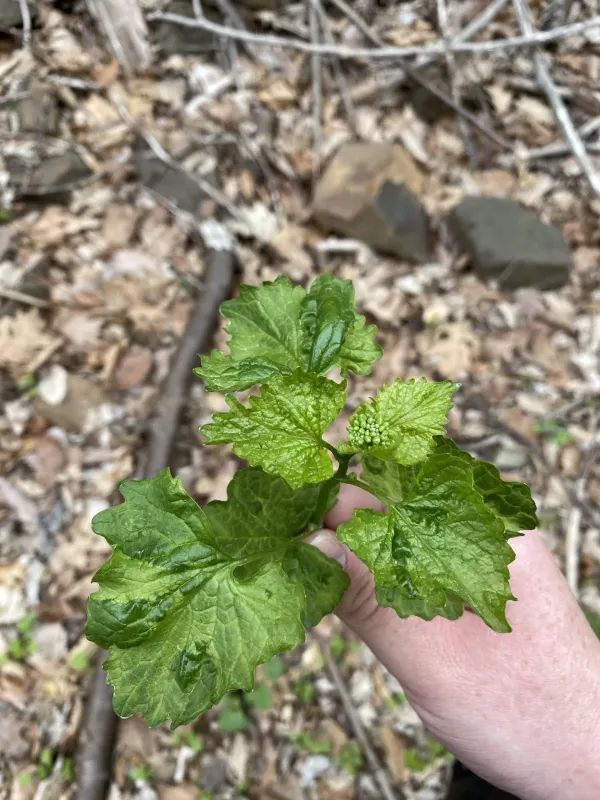
Description
Symptoms
The earliest signs of infection include chlorotic spotting or light green patches on young leaves. As the disease progresses, these spots develop into a characteristic mosaic pattern with alternating light and dark green areas, indicating disturbed photosynthesis.
Leaf deformation is a diagnostic symptom. Leaves may appear crinkled, puckered, or stunted, with edges that roll inward. This distortion is caused by the physiological disruption of growth hormones within the plant tissue due to the viral infection.
For heading brassicas like cabbage, the infection results in stunted head formation or, in severe cases, the complete absence of a proper head. The entire growth point may become necrotic, leading to the collapse of the plant's architecture.
Necrosis can also appear as dark brown or black streaks and spots on the leaves. These necrotic zones are often entry points for secondary pathogens, such as bacteria and fungi, which can cause soft rots that destroy the entire plant.
Systemic stunting is common in early-infected plants. Such plants remain significantly smaller than their healthy counterparts and exhibit a general yellowing (chlorosis) that can be easily identified in commercial fields.
Pathogen
The causative agent of the disease is the Turnip mosaic virus (Betacarmovirus brassicae, formerly known as Turnip mosaic virus or TuMV). It belongs to the Betacarmovirus genus and is known for its wide host range, primarily infecting members of the Brassicaceae family.
The virus consists of filamentous particles. It is not soil-borne and cannot be transmitted through seeds in most commercial brassica crops. Its survival depends entirely on "reservoir hosts," which include perennial weeds and volunteer brassica plants that grow during the off-season.
Aphids are the primary vectors of the virus. When an aphid feeds on an infected plant, it acquires the virus particles in its stylet and transmits them to healthy plants within seconds during subsequent feeding probes. This makes the virus highly contagious in the field.
Environmental conditions, particularly temperature, significantly influence the spread. Warm weather increases aphid activity and reproduction rates, which accelerates the dissemination of the virus across large cultivated areas in a very short period.
The virus is characterized by a high degree of genetic variability. Constant evolution and the emergence of new strains mean that previously resistant cultivars may eventually become susceptible, necessitating ongoing research and cultivar replacement.
Why it matters
The primary damage caused by Turnip mosaic virus is the dramatic loss of marketable yield. Deformed or stunted vegetables do not meet commercial quality standards and are often rejected by retailers, causing significant financial losses.
The virus impairs the overall metabolism of the plant, reducing the accumulation of carbohydrates and essential nutrients. This not only lowers the weight of the crop but also negatively affects its nutritional value and flavor profiles.
Plants weakened by the virus become highly susceptible to environmental stress and secondary infections. Bacterial soft rot, in particular, often follows the viral infection, turning once-stunted plants into unharvestable waste.
In seed production, the virus is devastating. Infected mother plants yield poor-quality seeds with lower germination rates, effectively preventing the successful reproduction and distribution of high-quality genetic material.
In cases of early-season infection, crop losses can exceed 80%. Given the efficiency of aphid transmission, a small initial infection source can quickly turn into a field-wide epidemic if not managed correctly.
Protection
Management of TuMV primarily focuses on vector control. Applying systemic insecticides helps reduce aphid populations, thereby decreasing the frequency of virus transmission between plants during the critical vegetative stage.
Sanitation is a vital prevention measure. Removing weeds and volunteer crops from around the field is essential to eliminate the natural reservoirs where the virus survives between growing seasons.
Choosing resistant or tolerant varieties is the most effective long-term strategy. Breeding programs continuously work to incorporate resistance genes, providing a robust line of defense that works regardless of aphid pressure.
Crop rotation and spatial isolation are key agronomic practices. Planting new brassica fields far from old ones or from areas with high populations of perennial brassica weeds significantly lowers the probability of virus introduction.
- Regular monitoring for aphid presence and viral symptoms.
- Eliminating host weeds in and around the field.
- Using systemic insecticides to control aphid vectors.
- Selecting virus-resistant cultivars for planting.
Content graph
Connections · Turnip mosaic virus
Most often together:
Marketplace
Products · 2

Community
Discussion
No discussions yet — be the first.