
Turnip yellows virus
Polerovirus tuyv
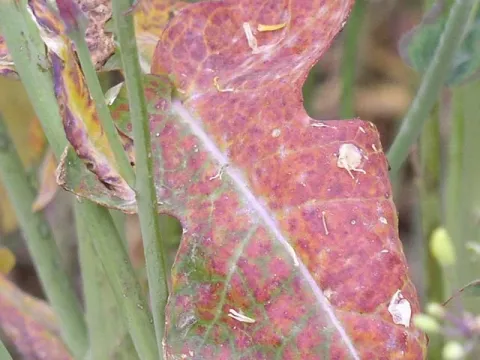
The primary symptom of the Turnip yellows virus is the yellowing of the leaf margins, which gradually progresses inward between the major leaf veins.
What the section contains
Turnip yellows virus
In many susceptible crops, especially oilseed rape, the foliage may show distinct reddening or purplish discoloration, particularly on older leaves.
Infected plants exhibit stunted growth, reduced leaf size, and shortened internodes, which gives the plant a characteristic dwarfed appearance.
Affected crops often show uneven development, poor pod set, and a significant reduction in the number of seeds produced per plant.
Symptoms may be less evident in some varieties or under specific environmental conditions, making early diagnosis based on visual cues challenging.
The Turnip yellows virus (TuYV) is a plant virus belonging to the genus Polerovirus within the family Solemoviridae.
It is characterized by a small, spherical particle containing a single-stranded RNA genome that is restricted to the phloem tissue of the host plant.
The virus is transmitted by several aphid species, with Myzus persicae (the peach-potato aphid) being the most efficient and common vector.
Transmission occurs in a persistent, circulative manner, meaning the aphid must feed on an infected plant to acquire the virus before transmitting it to a healthy one.
TuYV is not mechanically transmissible, nor is it transmitted through seeds, making the management of the aphid vector the cornerstone of disease control.
The prevalence of the virus is highly dependent on aphid activity and migration patterns during the early stages of crop development.
Warm and dry autumn conditions are conducive to the rapid colonization of young seedlings by winged aphids carrying the virus.
The presence of wild cruciferous weeds acting as alternative hosts ensures that the virus persists in the environment throughout the growing season.
Mild winter temperatures facilitate the survival of aphid populations, which can then act as primary inoculum sources in the following spring.
The timing of aphid flights relative to crop emergence is the most critical factor determining the overall disease pressure in a field.
The economic impact of TuYV is significant, with yield losses in oilseed rape often ranging from 10% to 30% depending on the severity of infection.
In addition to yield reduction, the virus decreases oil content in seeds and negatively impacts the overall quality of the final harvest.
Early infection is particularly detrimental, as it significantly restricts the growth of the root system and reduces the plant's ability to withstand winter.
Plants affected by the virus are more susceptible to secondary stressors, including frost damage and competition from weeds or other crops.
The indirect costs include increased expenditure on insecticides to control aphid populations, which raises production costs for farmers.
Integrated pest management, specifically the control of aphid vectors, is the most effective approach to reducing the incidence of TuYV.
Strategic timing of planting can help avoid the peak periods of aphid migration, thereby protecting the most vulnerable seedling stage.
Cultural practices, such as controlling volunteer rape and weeds in and around the field, help to eliminate important sources of the virus.
The use of resistant or tolerant crop varieties remains the most sustainable and efficient strategy for long-term disease management.
- Deploying yellow water traps to monitor aphid migration and activity.
- Applying systemic insecticides when aphid populations exceed economic thresholds.
- Ensuring optimal seedbed conditions to encourage vigorous plant establishment.