
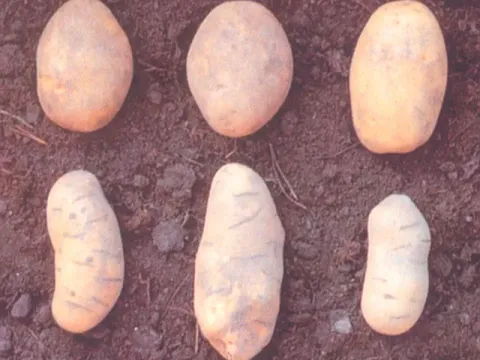
Potato tuber deformation
Potato deforming
Potato tuber deformation is primarily a physiological disorder, often exacerbated by viral infections like Potato Leafroll Virus (PLRV) or Potato Virus Y (PVY), which disrupt growth hormones.
What the section contains
Potato tuber deformation
Microbial pathogens, including certain types of phytoplasmas transmitted by insect vectors, can also interfere with the normal development and maturation process of the tubers.
Non-infectious causes include environmental stress factors that disrupt the metabolic balance required for uniform expansion of tuber cells during the bulking stage.
In some instances, infestation by soil-borne pests like nematodes can cause abnormal tissue proliferation, resulting in galls or severely misshapen, knobby tubers.
Genetic susceptibility in certain cultivars plays a role, as some varieties are more prone to malformation under suboptimal environmental conditions.
The most common symptoms include irregular tuber shapes, such as dumbbell-like constrictions, tapered ends, or a knobby, bumpy surface texture.
Deep fissures and cracks on the skin are often observed, which are a result of rapid, uneven growth spurts following a period of stress or water deficit.
Internal tissue may show signs of hollow heart or vascular discoloration in severely affected tubers, reducing the overall internal quality of the crop.
Foliar symptoms may include curling, yellowing, or mosaic patterns, indicating an underlying viral infection that is contributing to the tuber malformation.
- Dumbbell or constricted waist appearance.
- Knobby and irregular skin surface.
- Deep cracks or growth fissures.
- Small, underdeveloped or misshapen tubers.
- Stunted canopy growth in infected plants.
The primary driver of deformation is inconsistent soil moisture; a period of drought followed by heavy irrigation causes rapid, uneven cell expansion.
High soil temperatures during the tuberization phase inhibit normal metabolism and hormone regulation, leading to irregular growth patterns.
Nutrient imbalances, particularly high nitrogen levels coupled with low potassium or boron, can trigger excessive tissue growth in localized areas of the tuber.
Compacted or poorly aerated soils create stress for the root system, preventing the uniform uptake of water and nutrients essential for tuber development.
The presence of insect vectors like aphids and leafhoppers facilitates the transmission of viruses that permanently alter the growth cycle of the potato plant.
Misshapen tubers suffer from significantly reduced marketability, failing to meet the quality standards required for retail sales and high-end processing.
Deformed tubers have poor storage life as fissures and uneven surfaces provide easy entry points for secondary bacterial soft rot and dry rot pathogens.
Processing costs increase significantly because misshapen potatoes require extensive trimming and are unsuitable for industrial peeling and cutting machinery.
The nutritional profile and taste of deformed tubers are often inferior to well-developed, healthy potatoes due to altered starch accumulation processes.
Widespread deformation in a field indicates a high level of viral infection, which can lead to the total degradation of the seed stock if not managed.
The most effective strategy is the use of high-quality, certified, virus-free seed potatoes to minimize the risk of inherited systemic diseases.
Implementing a strict crop rotation schedule prevents the buildup of soil-borne pests and viruses that thrive in potato-heavy fields.
Maintaining consistent soil moisture through efficient irrigation systems is critical to prevent the growth spurts that cause cracking and deformation.
Integrated Pest Management (IPM) practices, including the control of aphids and other vectors, are essential to stop the spread of viruses in the crop canopy.
Balanced fertilization programs based on soil tests ensure the plant receives the necessary nutrients, particularly potassium, to maintain robust tuber development.