
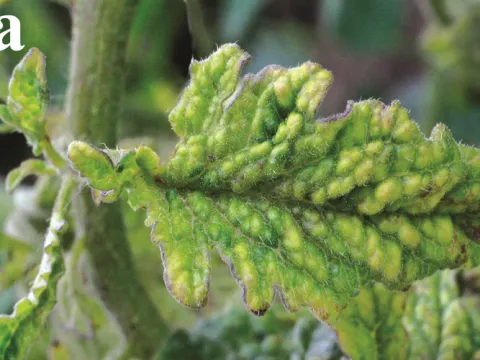
Potato virus X
Potato potexvirus
The causative agent is Potato virus X (PVX), belonging to the genus Potexvirus. It is a plant pathogenic virus characterized by flexuous, filamentous particles that lack an outer envelope.
What the section contains
Potato virus X
The virus primarily affects solanaceous crops. While potato is the most economically significant host, PVX also infects tomatoes, peppers, and various weed species within the Solanaceae family that serve as reservoirs.
Transmission in fields occurs mainly through physical contact between infected and healthy plants. Wind-driven friction of foliage or root contact creates micro-wounds that allow the virus to enter plant tissues.
Unlike many other plant viruses, PVX is not transmitted by aphids. Instead, it spreads rapidly through mechanical transmission via contaminated tools, farm machinery, or human handling during cultivation.
PVX is remarkably stable in the environment and can persist in soil, plant debris, and on agricultural equipment for extended periods, making sanitation essential for disease management.
Symptoms of PVX infection are diverse, ranging from completely latent (symptomless) infections to visible mosaic patterns. The severity depends heavily on the potato cultivar.
The most common symptom is mild mosaic, manifested as a pattern of light and dark green spots on the leaves. In some cases, leaves may become slightly rugose or crinkled.
Symptoms are often more pronounced in cooler temperatures or during secondary infections. While plants may show reduced vigor, the dramatic curling or necrosis associated with other viruses is typically absent.
Latent infection is a major concern, as plants showing no external signs can act as silent reservoirs. This facilitates the spread of the virus through infected seed tubers during planting.
In cases of mixed infections, such as when PVX co-infects with PVY, the synergy causes severe symptoms, including necrotic spotting and extreme leaf deformity, leading to significant yield losses.
Disease development is closely linked to environmental temperature. The replication and accumulation of viral titer within the host tissues are optimal at temperatures between +20°C and +25°C.
While humidity does not directly impact viral replication, it affects plant canopy density. Denser plantings increase the frequency of physical contact, which promotes the spread of the virus across the field.
Human activity is the primary factor in the transmission of PVX. Improper hygiene during field operations, such as pruning or mechanical weeding, creates the necessary wounds for viral entry.
The quality of seed tubers is the most critical factor for disease outbreaks. Planting tubers derived from infected mother plants ensures that the virus will be present in the new crop from the very beginning.
The presence of wild solanaceous weeds near the field margins supports a stable viral load, providing a constant source of infection that can spread to the crop via human or mechanical contact.
The primary impact of Potato virus X is the gradual degeneration of potato cultivars. Over successive generations, the cumulative effect of the virus leads to reduced plant physiological performance.
Yield losses due to PVX typically range from 10% to 25%. However, when the virus is present in combination with other pathogens, the impact on overall potato productivity can be much more severe.
Infected tubers often exhibit reduced nutritional quality, including lower starch content and impaired processing characteristics, which reduces their value for both human consumption and industrial use.
PVX infection compromises the host plant's immunity, rendering it more susceptible to secondary pathogens such as bacterial soft rot and various fungal diseases during the storage period.
For seed production farms, PVX contamination poses a severe economic threat, necessitating the rejection of entire seed lots to maintain certification standards and prevent further spread.
The core strategy for managing PVX is the use of certified, virus-free seed tubers derived from tissue culture (in vitro) and clonal multiplication programs.
- Maintaining spatial isolation between seed potato fields and commercial potato production.
- Rigorous disinfection of agricultural tools using appropriate sanitizers like bleach or alcohol after each field operation.
- Rogueing (removing) infected plants early in the season to eliminate sources of contact transmission.
- Implementing effective weed control strategies to eliminate reservoir hosts of the virus.
Breeding and planting resistant potato varieties remains the most effective long-term solution, as it provides innate protection against the virus without relying on chemical interventions.
Minimizing mechanical injury to the crop during cultivation is vital. Restricting unnecessary movement of personnel and machinery within the field significantly lowers the risk of spreading the viral inoculum.