
Powdery scab of potato
Pomovirus solani
Powdery scab is caused by the obligate parasite Spongospora subterranea f. sp. subterranea, which belongs to the Plasmodiophoraceae family.
What the section contains
Powdery scab of potato
The pathogen is an organism that infects the roots, stolons, and tubers of the potato plant, forming characteristic galls and lesions.
It persists in the soil as resting spore balls (cystosori), which can remain viable for several years even in the absence of a host crop.
The life cycle involves motile zoospores that require moist soil conditions to reach the root surface and initiate an infection.
Because of its long-term persistence in the soil, managing this disease remains a significant challenge for potato growers globally.
Initial symptoms include the development of small white or pale galls on roots and stolons, which later turn brown and necrotic.
On potato tubers, the disease manifests as small circular pustules that eventually rupture, revealing a dark, powdery mass of spores.
As the disease progresses, these lesions can expand and merge, causing deep craters or scab-like formations on the surface of the tuber.
Affected tubers exhibit rough, corky skin, which severely detracts from their overall quality and marketability.
While the foliage usually appears normal, heavy infection of the root system can result in reduced nutrient uptake and stunted growth.
The development of powdery scab is highly dependent on cool temperatures and high soil moisture levels during the growing season.
The disease thrives at soil temperatures between +12 °C and +18 °C, which are common during early planting phases.
Poorly drained, heavy, or compacted soils provide the saturated conditions necessary for the movement of zoospores through the soil matrix.
Soil pH levels ranging from acidic to slightly neutral are known to promote higher infection rates and pathogen activity.
Frequent rainfall or excessive irrigation, especially shortly after tuber initiation, significantly increases the severity of the infection.
Powdery scab significantly degrades the cosmetic appearance of potatoes, making them unsuitable for the fresh produce market.
The lesions caused by the pathogen provide entry points for secondary decay-causing organisms, leading to severe storage losses.
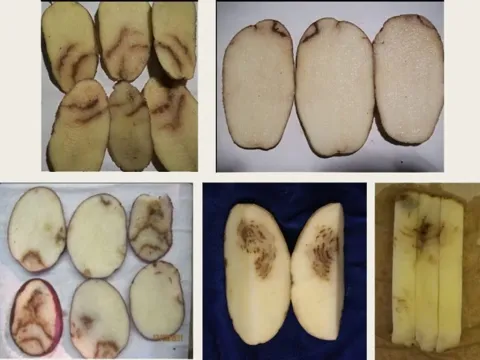
The pathogen is also a major vector for the Tobacco Rattle Virus (TRV), which triggers internal necrotic symptoms in potato tubers.
Severe infestations can lead to substantial yield reductions and loss of profit due to the inability to meet quality standards.
The damage to the tuber's skin layer increases transpiration, causing the tubers to shrivel and lose weight prematurely during storage.
The most critical control measure is the use of high-quality, certified seed potatoes that are free from the pathogen.
Implementing long crop rotation cycles (4–6 years) helps reduce the inoculum levels of cystosori within the soil profile.
Managing soil drainage and avoiding over-irrigation are vital steps to minimize the moisture levels required for spore mobility.
- Selecting potato cultivars with known resistance to powdery scab.
- Applying lime to acidic soils to raise pH levels.
- Cleaning equipment thoroughly to prevent the transfer of infested soil.
- Sanitizing storage facilities and disposal of contaminated culls.
Chemical seed treatments using effective fungicides can help protect the developing tubers during the early stages of plant growth.