
Privet necrotic spot
Carlavirus necroligustri
Description
Symptoms
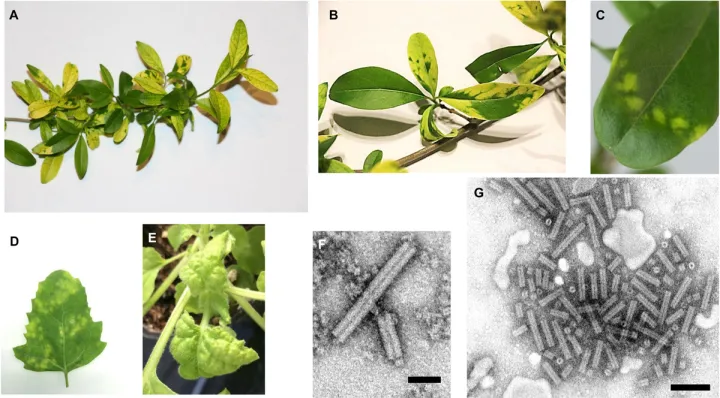
Initial symptoms manifest as small, chlorotic spots on young leaves, which gradually develop into necrotic lesions. As the disease progresses, these spots may merge, causing substantial tissue death.
Leaves often exhibit deformation, curling, or asymmetry. A common sign is premature leaf drop, which often begins in the lower parts of the canopy and spreads upwards over time.
In severe cases, dark longitudinal streaks or canker-like lesions appear on the stems, indicating systemic infection of the vascular system. Overall growth is severely stunted, leading to a thin, unhealthy appearance.
Flowering is significantly reduced, and in many instances, plants fail to produce buds entirely. The overall aesthetic value of the shrub is compromised as it loses its characteristic density and vitality.
- Chlorotic spotting on leaf surfaces.
- Leaf curling and deformation.
- Necrotic tissue patches.
- Premature leaf senescence.
- Stunted shoot elongation.
Pathogen
The causative agent of this disease is a virus belonging to the carlavirus group, scientifically named Carlavirus necroligustri. This virus is an obligate parasite that specifically targets the vascular system of the host plant.
The pathogen resides in the plant sap and spreads systemically throughout the host, interfering with essential physiological functions such as nutrient transport and photosynthesis. It replicates within the host cells, leading to gradual decline.
In the field, transmission primarily occurs through mechanical contact, contaminated pruning tools, and insect vectors. Infected nursery stock remains the most significant source of long-distance spread.
Detection is challenging because symptoms can be masked by environmental factors or confused with fungal spots. Laboratory testing (PCR or ELISA) is required to confirm the presence of the virus.
The host range of Carlavirus necroligustri is restricted largely to members of the Ligustrum genus, which allows for focused disease management strategies in landscape settings.
Conditions for development
High humidity and moderate temperatures favor the spread of the virus, primarily by promoting the activity of insect vectors that move the pathogen between plants. These vectors thrive in humid, sheltered environments.
Poor sanitization of pruning shears and other tools is a major driver of spread within garden settings. Any open wound provides a direct entry point for the viral particles to infect the vascular tissue.
Crowded plantings with poor air circulation encourage the disease to spread through leaf-to-leaf contact. Such environments prevent the plant from drying out, facilitating the movement of pathogens.
Stressors such as poor soil nutrition, extreme weather, or lack of light weaken the plant's natural defense mechanisms. Consequently, weakened plants are much more susceptible to viral invasion.
The virus persists in the woody tissues of the plant throughout the winter, allowing for rapid reactivation during the following spring's growth cycle. This continuity makes eradication extremely difficult.
Why it matters
The primary impact of Privet necrotic spot is the severe degradation of the shrub's ornamental quality. It makes the plants look sparse and sickly, which is detrimental to the use of privet as hedges.
Long-term infection leads to the death of branches and eventual decline of the entire plant. This creates gaps in landscape designs that require costly replacements and constant maintenance efforts.
The economic impact includes both the loss of plant material and the increased labor costs associated with removing infected specimens. There is no chemical cure for the virus once established in the plant.
Infected hedges act as reservoirs for the virus, threatening healthy neighboring shrubs. This poses a significant risk to overall biodiversity and the longevity of landscaping projects.
Plants infected with the virus are also more likely to succumb to secondary opportunistic pathogens, further accelerating the decline and decay of the plant tissues.
Protection
The primary strategy for control is the immediate roguing (removal and destruction) of symptomatic plants. Burning or deep burial of the infected material is necessary to prevent environmental contamination.
Strict disinfection of all pruning equipment using alcohol or bleach solutions between each cut is essential to prevent mechanical transmission. Sanitation must be a priority for all maintenance work.
Integrated Pest Management (IPM) should be employed to control insect vectors. By reducing the population of sap-sucking insects, the secondary transmission of the virus is significantly curtailed.
Maintaining optimal plant health through proper irrigation and balanced fertilization helps the plant withstand the infection. Healthy plants often show milder symptoms compared to neglected ones.
Prevention relies on sourcing certified, virus-free planting material from reputable nurseries. Implementing a quarantine period for new additions can help identify potential issues before they spread to established hedges.
Discussion
No discussions yet — be the first.