
Privet yellow
Privet yellow
Description
Symptoms
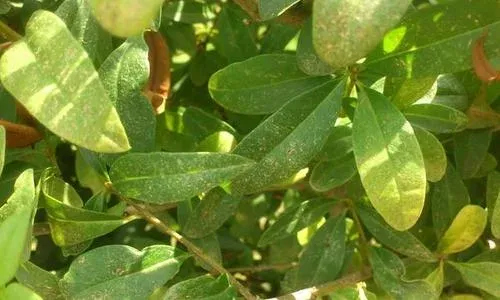
The most prominent symptom is a generalized chlorosis, where leaves turn yellow or pale, indicating a significant reduction in photosynthetic activity.
Plants often exhibit stunted growth and show signs of leaf miniaturization, where the foliage becomes significantly smaller than normal.
A classic sign is the development of witches' broom, characterized by the proliferation of numerous thin, weak, and upright shoots from a single node.
Floral abnormalities are common, with flowers failing to develop properly or transforming into leaf-like structures, rendering the plant sterile.
Over time, the shrub loses its structural integrity and vigor, eventually leading to a decline in the overall appearance of the foliage.
Pathogen
Privet yellows is a plant disease caused by phytoplasmas, which are specialized, cell-wall-less bacteria that reside in the phloem tissue of the host plant.
The transmission of this pathogen is primarily carried out by insect vectors, such as leafhoppers, which feed on infected phloem sap and subsequently spread the bacteria to healthy plants.
Since these pathogens are obligate parasites living within the vascular system, they disrupt the normal transport of nutrients and hormones throughout the shrub.
The systemic nature of the infection makes it extremely difficult to eradicate, as the phytoplasma colonizes all parts of the plant, including the roots and crown.
Mechanical transmission is also possible through contaminated pruning tools, which can facilitate the spread of the disease within a hedge if hygiene protocols are neglected.
Conditions for development
Disease progression is highly dependent on the activity cycles of insect vectors, which thrive in warm and dry environmental conditions.
The presence of weeds near the privet plantings serves as a reservoir for both the phytoplasma and the insects that transmit it.
Shrubs under environmental stress, such as drought or nutrient deficiency, are significantly more susceptible to infection and exhibit faster decline.
Dense planting configurations create a localized microclimate that allows for easy movement of vectors between adjacent plants, fueling outbreaks.
The late summer and early autumn months represent the peak risk period when vector populations are most active and prone to feeding on new plant growth.
Why it matters
The disease causes a gradual but steady decline in plant health, eventually resulting in the death of the infected shrub.
Loss of foliage density and abnormal coloration render the plant useless for landscaping or hedging purposes, destroying its aesthetic value.
An infected specimen acts as a permanent focal point for further infection, threatening other healthy privet plants in the vicinity.
Compromised metabolism leaves the plant unable to store energy for dormancy, making it highly susceptible to winter injury and frost.
The economic impact involves the high cost of removing infected hedges and the labor required to replant and establish new, disease-free shrubs.
Protection
Currently, there is no curative treatment for phytoplasma-infected plants, making the removal and destruction of symptomatic shrubs the primary control strategy.
Implementing a strict pest management program to control leafhoppers and other sucking insects is essential to minimize the risk of transmission.
It is crucial to use only high-quality, certified nursery stock to ensure that the disease is not introduced into the garden environment from the start.
Regular sanitation of pruning tools using appropriate disinfectants between each shrub is vital to prevent mechanical spread during maintenance.
- Monitor plants frequently for signs of leaf yellowing or stunted growth.
- Apply systemic insecticides to manage vector populations during peak activity.
- Maintain optimal soil fertility to enhance the plant's natural resistance.
Discussion
No discussions yet — be the first.