
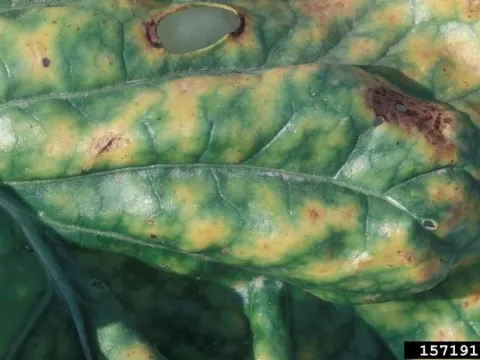
Beet western yellows virus
Polerovirus bwyv
Beet western yellows virus (BWYV) is a plant virus belonging to the genus Polerovirus. It is an RNA virus known for its wide host range, which includes sugar beet, brassicas, legumes, and various weeds.
What the section contains
Beet western yellows virus
The virus is transmitted by aphids in a semi-persistent manner. The most common vector is the green peach aphid, Myzus persicae, which acquires the virus by feeding on infected plants.
Once an aphid acquires the virus, it remains infectious for a significant period. The virus does not replicate within the insect but is transmitted through the salivary glands during the feeding process on the phloem.
The virus strictly localizes within the plant's phloem, interfering with the translocation of sugars and nutrients from the leaves to the roots. This disruption leads to stunted growth and reduced crop yields.
Mechanical transmission is not a factor for BWYV. Effective management relies heavily on controlling the aphid vectors and eliminating the virus reservoirs in the environment.
Symptoms typically begin with yellowing (chlorosis) of the older and intermediate leaves. The chlorosis usually starts at the leaf margins and advances inwards towards the center of the leaf blade.
A distinctive feature of this infection is the thickening and increased brittleness of the leaf tissue. Unlike other viral diseases, the leaves do not typically show curling or severe malformation.
In many susceptible cultivars, the yellowing tissue may develop a reddish or purplish tint, especially in cooler conditions. The veins often remain green, creating a distinct contrast against the yellowing leaf.
Growth of the plant is stunted, and in severe cases, the taproot development is significantly retarded, which directly impacts the sugar content and overall tonnage at harvest.
- Interveinal and marginal yellowing
- Thick and brittle leaf texture
- Lack of leaf distortion
- Reduced root size and sugar content
The development and spread of BWYV are heavily influenced by the population density of aphid vectors. Warm, dry springs are particularly conducive to rapid aphid reproduction and migration.
The presence of overwintering hosts is crucial for the virus's survival. Wild weeds and volunteer crops serve as primary reservoirs that provide the virus to aphids in the early season.
Long-distance spread occurs primarily through the migration of winged aphid forms. Fields located near orchards, vegetable gardens, or infested weed patches are at a higher risk of early-season infection.
The crop stage is critical; infections that occur during the early vegetative stages result in the most significant economic losses compared to infections happening late in the season.
Microclimate conditions within the dense leaf canopy can provide a favorable environment for aphid colonies to thrive, further facilitating the transmission of the virus.
The economic impact of BWYV is substantial, as the infection severely limits the photosynthetic capacity of the plants, preventing them from accumulating necessary biomass.
Sugar accumulation is drastically reduced because the phloem-limited virus prevents the transport of carbohydrates to the roots, leading to a significant drop in sugar percentage.
Infected plants exhibit reduced vigor, making them more susceptible to opportunistic pathogens and environmental stresses like drought or heat.
Growers often incur additional costs due to the need for intensive insecticide treatments to control the aphid populations throughout the growing cycle.
Yield losses can range from 20% to 50% in severe epidemics, especially if the infestation starts during the early developmental phases of the sugar beet crop.
The primary control strategy involves the monitoring and management of aphid populations using systemic insecticides to prevent the initial spread of the virus.
Effective weed management is essential; removing potential virus reservoirs such as brassica weeds and volunteer plants reduces the local inoculum pressure.
Spatial isolation of sugar beet fields from other highly susceptible crops, such as rapeseed or various vegetable crops, can help mitigate the risk of cross-infection.
Cultural practices that promote vigorous plant growth help the crop better tolerate the physiological stress caused by the viral infection.
Integrated Pest Management (IPM) practices, including the use of yellow sticky traps for monitoring, allow growers to time insecticide applications accurately to maximize efficiency.