
Beet Rhizomania
Benyvirus solibetae
The causative agent of rhizomania is the Beet necrotic yellow vein virus (BNYVV), which belongs to the Benyvirus genus. It is a soil-borne virus that primarily damages the root system of sugar beets.
What the section contains
Beet Rhizomania
The virus is vectored by the obligate soil-dwelling parasite Polymyxa betae, a plasmodiophorid protist. The virus persists in the resting spores of this vector for many years within the soil profile.
Infection occurs when zoospores of the vector fungus, which are released in moist soil conditions, infect the root hairs of the beet plant, simultaneously inoculating them with the virus particles.
These resting spores can remain viable in the soil for over a decade, making the eradication of the virus from infected fields practically impossible through conventional means.
The spread of the disease across fields is predominantly mechanical, caused by the movement of infested soil attached to farm machinery, tillage equipment, and agricultural tools.
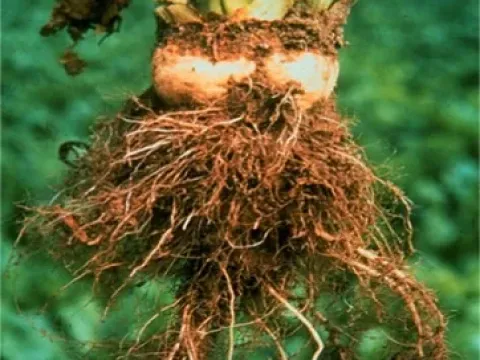
The most distinctive symptom is the proliferation of fine, hairy lateral roots, commonly referred to as a "root beard." The taproot itself is often stunted, tapered, and necrotic, leading to a loss of overall weight.
Foliar symptoms include chlorosis and stunted growth of the plant canopy. Leaves may exhibit a pale yellow discoloration, particularly along the veins, which gives the disease its specific common name.
During the growing season, infected plants often appear wilted even when soil moisture is adequate, as the compromised vascular system of the root fails to transport water and nutrients efficiently.
Cross-sections of the taproot reveal darkened, brownish necrotic vascular bundles, which are a hallmark indication of the systemic viral infection within the plant tissues.
- Development of a fibrous root "beard."
- Stunted foliage and yellowing of leaf veins.
- Necrosis of internal vascular tissues.
- Significant decrease in root and sugar yield.
Rhizomania development is heavily dependent on soil moisture. High levels of water in the soil favor the activity and mobility of the Polymyxa betae zoospores, facilitating rapid infection.
The disease is most severe in poorly drained soils or fields with compact layers, where waterlogged conditions persist, creating a perfect environment for the vector to flourish.
Optimal temperatures for the development of symptoms and the replication of the virus in the host plant range from 15 to 25 degrees Celsius, matching the active sugar beet growing season.
Soil structure plays a critical role in disease severity; heavy, silt-rich soils that retain moisture are typically more prone to rhizomania outbreaks than sandy, well-drained soils.
Repeated planting of susceptible sugar beet varieties in the same field drastically increases the population of Polymyxa betae spores, ensuring a higher viral load in the soil.
The economic impact of rhizomania is severe, as the virus significantly reduces the growth of the taproot. Yield losses can reach up to 70 percent in highly infested fields if susceptible varieties are used.
The quality of the harvested beets is drastically impaired. The virus significantly reduces the sucrose content and increases the level of non-sugar impurities, complicating the sugar extraction process.
Sugar factories experience lower processing efficiency and higher energy costs due to the poor quality of rhizomania-infected raw materials, often leading to lower factory output.
Farmers face long-term economic consequences as the presence of the virus in the soil limits future crop options and requires the use of more expensive, resistant hybrid seeds.
The disease effectively forces a change in regional agronomic practices, pushing farmers toward resistant varieties which, while effective, might have different agronomic requirements.
The primary method of managing rhizomania is the use of genetically resistant sugar beet hybrids. These hybrids are specifically bred to limit the multiplication and spread of the virus within the plant.
Improving field drainage and soil structure is essential to minimize water stagnation. Good field management practices help reduce the conditions necessary for Polymyxa betae activity.
Strict crop rotation schedules are vital. While the spores last a long time, extending the duration between beet crops can help prevent the dramatic increase of the pathogen population.
Sanitation practices, including the thorough cleaning of machinery and tires before moving from infested fields to clean areas, are crucial for limiting the dissemination of the virus.
As there are no chemical treatments available to control the virus in the soil, an integrated approach focusing on resistant cultivars and optimized agronomy remains the gold standard for control.