
Beet rhizomania
Pomovirus betae
Beet rhizomania is caused by the Beet necrotic yellow vein virus (BNYVV), which belongs to the Pomovirus genus.
What the section contains
Beet rhizomania
The virus particles are rod-shaped and contain a multipartite single-stranded RNA genome, which is essential for its virulence.
The virus cannot survive or spread on its own; it requires a soil-borne vector, the plasmodiophorid protist Polymyxa betae.
Polymyxa betae produces resting spores (cystosori) that harbor the virus and protect it from adverse environmental conditions.
The virus is transmitted to the sugar beet roots when the vector's zoospores infect root hairs during periods of high soil moisture.
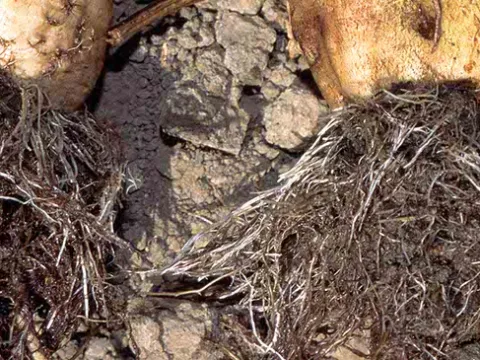
The most distinctive symptom is the proliferation of fine, lateral root hairs, which gives the root a bearded appearance.
Foliar symptoms include yellowing, wilting, and stunted growth, often leading to a general chlorotic appearance of the plant.
Root internal tissues show browning of the vascular bundles, and the taproot is typically thin and underdeveloped.
Infected patches in a field are often clearly visible as areas of uneven plant height and premature wilting during hot weather.
Yield loss and sugar content reduction can occur even if external symptoms appear minimal in some resistant hybrid varieties.
The disease thrives in fields with poor drainage and high soil moisture, which are necessary for Polymyxa betae activity.
Optimal temperatures for the development of the virus and its vector typically range between 20°C and 25°C.
Soil structure plays a major role; heavy soils with high water retention capacity are more prone to severe outbreaks.
Spread to non-infested fields occurs primarily through the movement of contaminated soil via farm machinery and equipment.
Once established in a field, the viral inoculum remains viable for many years due to the longevity of the vector’s resting spores.
Rhizomania is considered one of the most destructive diseases of sugar beets, capable of causing yield losses of up to 70%.
The disease significantly lowers the sucrose content in the beets, causing major economic losses during the sugar extraction process.
Infected roots have poor storage qualities, leading to further losses while stored in industrial piles before processing.
Once a field is infested, the soil remains permanently contaminated, forcing farmers to abandon conventional varieties.
The disease undermines the financial viability of sugar beet cultivation in highly infected agricultural regions.
The use of resistant sugar beet hybrids is the most reliable and primary strategy for managing rhizomania in endemic areas.
Proper field management, including the installation of drainage systems to prevent waterlogging, significantly reduces the disease incidence.
Strict sanitation protocols must be followed to clean machinery of soil and crop debris when moving between different fields.
Crop rotation helps manage the soil inoculum level, though it is not a complete cure due to the long lifespan of the resting spores.
Implementing integrated pest management practices helps maintain soil health and minimize the spread of Polymyxa betae.