
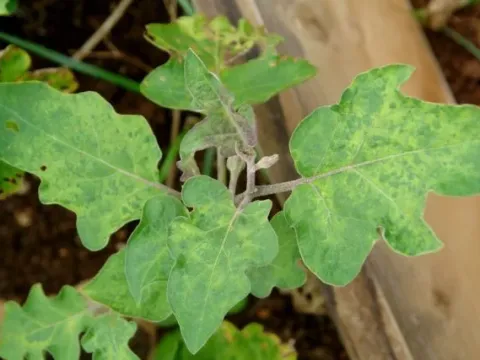
Begomovirus
Begomovirus
Begomovirus is a genus of viruses in the family Geminiviridae, known for their unique twin-particle morphology and single-stranded DNA genome. They are among the most destructive pathogens causing diseases in various horticultural and field crops globally.
What the section contains
Begomovirus
The primary vector for the transmission of Begomovirus is the whitefly (Bemisia tabaci). The virus is acquired by the whitefly during feeding on infected plant tissues, after which it circulates within the insect's body before being transmitted to healthy plants.
Once introduced into the plant, the virus moves through the phloem. It hijacks the host's cellular replication machinery, leading to significant disruption of hormonal balances and physiological functions such as photosynthesis and nutrient transport.
Begomoviruses are noted for their high evolutionary rate, which allows them to bypass plant resistance mechanisms. This genomic plasticity poses a constant challenge to plant breeders and pathologists worldwide.
These viruses are particularly prevalent in tropical and subtropical regions but are increasingly found in temperate zones due to changing climate patterns that favor the survival of whitefly populations throughout the year.
Symptoms of Begomovirus infection are often severe and systemic. Leaf curling, puckering, and severe distortion are the most common signs, reflecting the virus's impact on leaf development and cell growth.
Chlorosis and mosaic patterns—characterized by alternating patches of green and yellow tissue—frequently appear along the leaf veins. In some species, this progresses to a bright yellow or golden mosaic coloration.
Plants infected early in their growth stage show significant stunting and reduced internode length, resulting in a bushy or rosetted growth habit. The entire architecture of the plant is often permanently altered.
Reproductive success is drastically reduced, with symptoms including flower drop, poor fruit set, and misshapen, unmarketable produce. These effects make the disease particularly devastating for fruit-bearing crops like tomatoes and peppers.
- Severe leaf curling and deformation.
- Chlorotic mosaic patterns on foliage.
- Stunting and shortened internodes.
- Premature abortion of flowers and fruit.
- Reduced overall vigor and biomass.
Disease development is highly dependent on the population dynamics of the whitefly vector. Warm temperatures and high humidity create the ideal environment for rapid whitefly reproduction and high transmission rates.
The continuous cropping of host plants, especially in greenhouse environments, provides a constant source of inoculum, allowing the virus to persist and circulate within the agroecosystem throughout the year.
Weed hosts in and around agricultural lands act as essential reservoirs for the virus. During periods when main crops are not present, the virus resides in wild plant species, ready to infect new plantings.
Poor sanitation practices, such as failing to remove crop residues after harvest, contribute to the rapid spread of the disease. The virus can survive in plant debris until the next planting cycle begins.
The lack of crop rotation and spatial isolation between fields of varying ages allows the whitefly to move easily from mature, infected plants to young, highly susceptible seedlings.
Begomovirus infections are irreversible. Once a plant is infected, it cannot be cured, and the viral load usually remains high, making the plant a continuous source of infection for neighboring crops.
Economic damage can be catastrophic, with yield losses often reaching 100% in susceptible varieties. This can force farmers to abandon certain crops or incur massive financial losses during peak seasons.
Fruit quality is significantly degraded. Fruits from infected plants often fail to ripen properly, lack sweetness, or have abnormal shapes, rendering them unsuitable for retail markets or processing.
The constant need for insecticide applications to control the whitefly vector increases production costs and can lead to the development of pesticide resistance in insect populations, creating long-term management difficulties.
In addition to direct losses, the presence of the virus complicates trade and export, as infected material cannot be safely transported across borders, leading to significant quarantine-related economic impacts.
Integrated Pest Management (IPM) is essential for controlling Begomovirus. This includes the systematic use of insecticides to manage whitefly populations, ensuring they are controlled before the virus can be transmitted.
Strict field and greenhouse sanitation is vital. Removing weed hosts and promptly destroying infected plants prevents the spread of the virus to healthy parts of the crop.
Breeding and utilizing resistant or tolerant crop varieties is the most sustainable approach. Genetic resistance can help maintain yields even when the virus is present in the environment.
Physical barriers, such as insect-proof fine-mesh nets in greenhouses, are highly effective in preventing whiteflies from reaching the plants, thus creating a safer growing environment for susceptible crops.
Spatial and temporal isolation of plantings helps to break the cycle of infection. Avoiding staggered planting schedules or ensuring adequate distance between different age groups of the same crop reduces the risk of virus migration.