
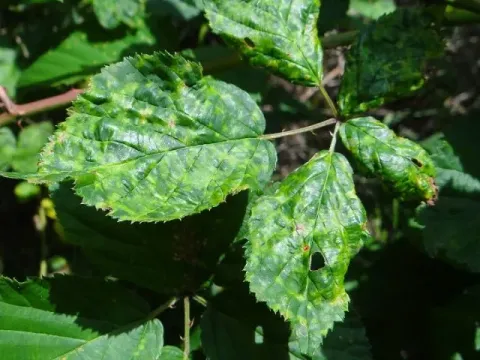
Tobacco mosaic virus
Ilarvirus tamv
The causative agent of this disease is the Tobacco mosaic virus (TMV), a highly stable RNA-based pathogen capable of persisting for years in soil and debris.
What the section contains
Tobacco mosaic virus
This virus is notable for its exceptional durability in the environment, remaining infectious even in dried plant tissues and contaminated tobacco products.
Transmission occurs primarily through mechanical injury, where virus particles enter healthy plant cells through microscopic wounds caused by handling or tools.
It does not rely on insect vectors for dissemination, making human activity and contact between plants the most significant transmission pathways.
Once inside the host, the virus hijacks the plant's cellular machinery to replicate, disrupting photosynthesis and overall growth processes.
The hallmark symptom is a mosaic-like pattern of alternating light and dark green patches on the foliage, often accompanied by distinct mottling.
Leaves frequently exhibit significant malformation, appearing wrinkled, distorted, or turning into narrow, string-like structures in severe cases.
Infected plants display a clear reduction in height and vigor, with shortened internodes and a stunted, bushy appearance that signals systemic stress.
Fruits may develop mottled skin, necrotic spots, or a bumpy, uneven texture, which renders them unmarketable and of poor quality.
Severe infections can lead to browning and necrosis of the stems and petioles, eventually causing branches or the entire plant to collapse.
Optimal virus propagation typically occurs in warm environments with temperatures between 25°C and 30°C, combined with high sunlight exposure.
High planting density in greenhouses facilitates easy transmission, as the physical contact between neighboring plants encourages the spread of the virus.
Agricultural practices such as pruning, thinning, or harvesting without proper sterilization of tools act as major catalysts for rapid infection outbreaks.
The accumulation of plant residues in the soil provides a persistent reservoir for the virus, posing a constant threat to subsequent planting seasons.
Plants under nutrient stress, particularly lacking in phosphorus or potassium, demonstrate reduced immune function, making them more susceptible to TMV.
Tobacco mosaic virus is economically devastating, often resulting in significant yield losses that can exceed 50-80% in affected areas.
In addition to yield volume, the quality of the harvest is severely compromised, making produce unsuitable for fresh markets or industrial processing.
Early-stage infection often leads to stunted plants that never achieve their full production potential, forcing farmers to discard large portions of the crop.
Because there are no curative treatments for viral diseases, the presence of TMV often requires the complete removal of symptomatic plants to save the rest.
The long-term persistence of the pathogen in the soil forces shifts in crop rotations, limiting the availability of land for susceptible Solanaceous species.
The primary control strategy involves rigorous sanitation, including the exclusive use of certified virus-free seeds and resistant plant cultivars.
Sterilization of tools, gloves, and greenhouse surfaces with appropriate disinfectants like bleach solutions is essential to prevent mechanical transmission.
Weed management is critical, as many common weeds in the Solanaceae family can act as asymptomatic reservoirs for the virus throughout the year.
Immediate roguing (removal and destruction) of symptomatic plants is vital to isolate the infection and protect the remaining healthy crop population.
Adhering to strict crop rotation cycles, avoiding host crops for at least 3 to 4 years, effectively reduces the infectious viral load in the field.