
Tobacco mosaic virus on pepper
Tobamovirus capsici
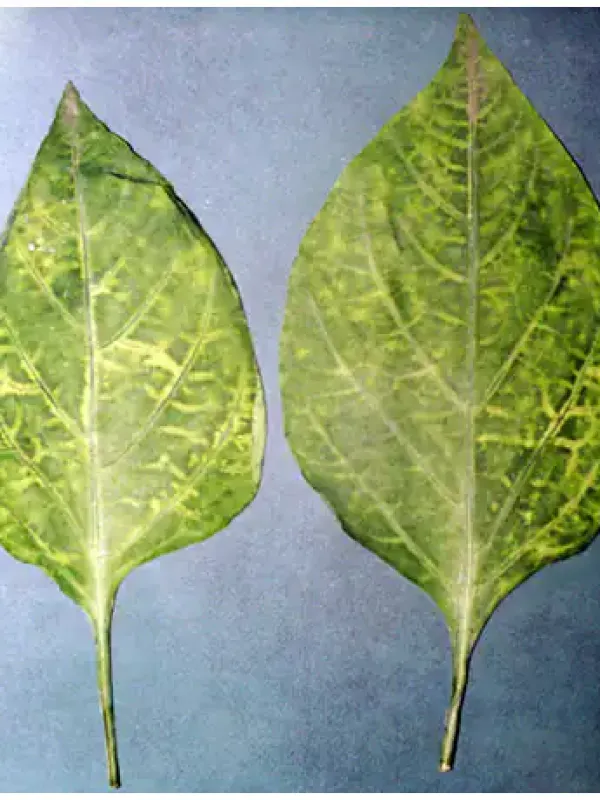
Description
Symptoms
The most common symptoms include a mottled pattern on the leaves, with light and dark green patches creating a mosaic-like appearance. Leaves may become distorted, crinkled, or reduced in size.
Infected plants typically show stunted growth with significantly shortened internodes. The overall vigor of the plant is reduced, leading to a thin and sparse canopy compared to healthy specimens.
Pepper fruits from infected plants often display irregular spots, chlorotic patches, and severe deformation. This makes them unmarketable and reduces their quality for both fresh consumption and processing.
Flower and fruit abortion is common, leading to a drastic decrease in total yield. In some cases, necrotic spots or streaks may develop on the stems and leaf stalks as the disease progresses.
It is important to note that symptoms can vary depending on the plant variety and environmental factors, and laboratory testing (such as ELISA or PCR) is often required for a definitive diagnosis.
Pathogen
The causative agent of this disease is the Tobacco mosaic virus (TMV), which belongs to the genus Tobamovirus. It is one of the most stable and resilient plant viruses known to science, capable of surviving for years in various conditions.
The virus consists of RNA encapsulated in a protein coat, forming rod-shaped particles. It infiltrates pepper plants through wounds caused by handling, pruning, or insect feeding, subsequently spreading systemically through the plant's vascular system.
TMV is highly contagious and has a wide host range. Once a plant is infected, the virus hijacks cellular machinery to replicate, causing a systemic infection that persists throughout the plant's life.
Because the virus is incredibly stable, it can remain infectious on tools, contaminated surfaces, clothing, and even in dried plant debris for extremely long periods, making sanitation essential.
In the case of peppers, specific strains of the virus have evolved to adapt to the physiological conditions of the Capsicum genus, leading to widespread infections in both greenhouses and open fields.
Conditions for development
The virus is primarily spread through physical contact. Cultural practices such as pruning, staking, and harvesting provide the mechanical wounding necessary for the virus to enter the plant tissues.
High temperatures and intense light often accelerate the virus multiplication rate within the host. Greenhouse environments with poor air circulation can exacerbate the impact of the disease on crop vitality.
Contaminated tools are a major vector. Using the same equipment on infected and healthy plants without proper sterilization between tasks is the most common cause of rapid greenhouse outbreaks.
While some insects can carry the virus, mechanical transmission via human activity remains the primary cause of spread in agricultural settings. Close plant spacing also facilitates the transmission from one leaf to another.
Reservoir weed species, especially those belonging to the Solanaceae family, can harbor the virus and act as an initial source of infection before the virus spreads to the main pepper crop.
Why it matters
The economic impact of TMV is significant, as there is no chemical cure for viral infections in plants. Once a crop is infected, the potential for marketable yield is severely compromised.
Plants infected at an early stage often fail to produce any viable fruit at all. Late-stage infections lead to reduced size, quality, and shelf life of the produce, causing direct financial losses.
The persistence of the virus in the soil and on greenhouse structures creates long-term management challenges, often necessitating expensive sanitization or the removal of topsoil to prevent future outbreaks.
Viral infection leaves the plants in a weakened state, making them more susceptible to opportunistic secondary bacterial or fungal pathogens, which can complicate crop management even further.
In large-scale pepper production, an outbreak of TMV can lead to the total abandonment of a greenhouse section, as the virus can quickly move through the entire planting area if not contained immediately.
Protection
The most effective strategy is the use of disease-free, certified seeds. Seed treatment and strict sanitation of nursery beds are critical first steps in preventing the introduction of the virus to the farm.
Rigorous hygiene protocols should be implemented: workers must wash their hands frequently, and tools should be sterilized using appropriate agents (like trisodium phosphate or high-percentage alcohol) between plants.
Promptly identify and rogue out infected plants. Removing and destroying the entire symptomatic plant, along with its root system, is essential to limit the spread of the virus to neighboring healthy plants.
Maintain clean field borders by controlling weeds that act as alternate hosts. Integrated Pest Management (IPM) practices should be followed to keep insect populations low and minimize plant damage.
Choosing resistant cultivars is the primary defense method for modern farmers. Breeding programs have successfully developed pepper hybrids with specific resistance genes to Tobamoviruses, which is the most reliable way to ensure a stable harvest.
Discussion
No discussions yet — be the first.