
Description
Symptoms
The term "latent" highlights the disease's most problematic feature: many hop varieties remain asymptomatic. Infected plants may appear completely normal while acting as reservoirs for the pathogen.
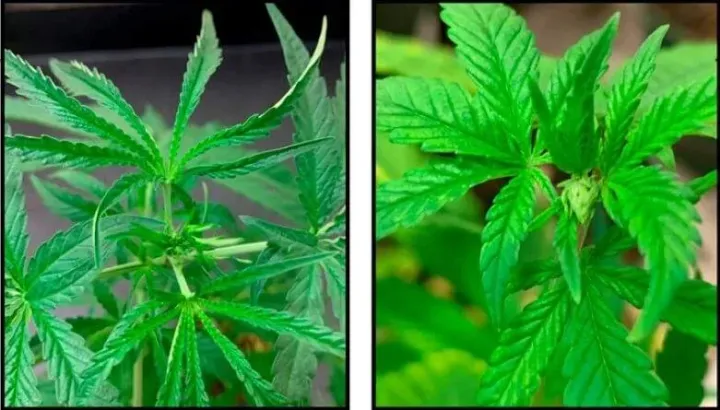
When symptoms do occur, they typically manifest as chlorosis, interveinal yellowing, and stunted plant growth. Internodes are often shortened, leading to a brittle and physically dwarfed appearance.
The most significant impact is observed in the hop cones, which become smaller, less dense, and structurally compromised, resulting in a substantial drop in commercial quality.
In cannabis, infection results in "dudding," characterized by twisted leaves, loss of trichome density, and a significant reduction in biomass and floral potency.
Because these symptoms can be easily confused with nutritional deficiencies or environmental stress, molecular diagnostic methods like RT-PCR are required for definitive identification.
Pathogen
The causative agent of the disease is Hop latent viroid (HLVd), a small, circular, non-coding RNA molecule. Unlike viruses, it lacks a protein coat and relies entirely on host cell machinery for replication.
HLVd belongs to the Pospiviroidae family. Its unique structure makes it exceptionally resilient to environmental stressors, allowing it to persist in crop debris and tools for extended periods.
The primary host is the common hop (Humulus lupulus). However, it is also highly pathogenic to cannabis, where it is known to cause severe yield losses and significantly alter the chemical profile of the plant.
Transmission occurs primarily through mechanical means. It spreads via contaminated pruning tools, machinery, and physical contact between infected and healthy tissues during routine agricultural practices.
In commercial hop yards, the disease spreads during training, pruning, and harvesting. If tools are not disinfected between rows or individual plants, the viroid can quickly contaminate the entire field.
Why it matters
The economic impact of HLVd is severe, with yield losses in hops ranging from 10% to 30%. Even in asymptomatic cases, the reduction in overall plant vigor leads to lower financial returns.
A critical loss for the brewing industry is the reduction in alpha-acid content within the hop cones. This degradation makes the harvest unsuitable for high-quality beer production.
Infected plants exhibit reduced tolerance to abiotic stressors, such as drought, extreme heat, and cold, making the crop more difficult and expensive to manage throughout the season.
The disease increases operational costs significantly due to the necessity of periodic lab testing and the rigorous labor required to identify and cull infected specimens.
The danger is compounded by the propagation cycle. Using cuttings from undetected infected mother plants ensures that the next generation of crops will carry the viroid, perpetuating the cycle of loss.
Protection
The primary control measure is the exclusive use of certified virus-free planting material. Sourcing stock from reliable, tested nurseries is the only way to prevent the initial introduction of HLVd.
Strict sanitation protocols must be enforced. Pruning tools and equipment must be disinfected between every plant using appropriate solutions, such as bleach or specialized virucidal agents.
Rouging (culling) is the only management strategy for existing infections. Once a plant tests positive for HLVd, it must be removed entirely, including the root system, and disposed of away from the field.
Implementing strict quarantine and access controls between different sections of the hop yard helps contain the spread and protects healthy areas from mechanical transmission.
Since there are no chemical treatments or cures for viroids, successful management depends entirely on diligent monitoring, biosecurity practices, and regular diagnostic testing.
Pathogens and affected parts
Affects crops · 1
Discussion
No discussions yet — be the first.