
Hop latent viroid
Hostuviroid impedihumuli
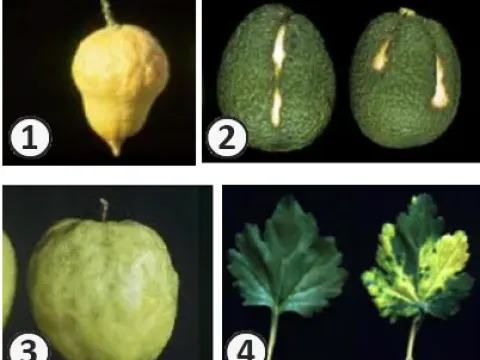
The primary symptom of Hop latent viroid (HpLVd) infection is a distinct chlorotic mottling on the leaves of the hop plant.
What the section contains
Hop latent viroid
Leaves often exhibit curling, deformation, and stunted development compared to healthy foliage in the same field.
Lateral shoots show reduced elongation and vigor, which impacts the overall architectural development of the hop bine.
Infected plants produce smaller, lighter hop cones that lack the density and quality required for commercial brewing standards.
Symptoms are most visible during active growth phases, with yellow patches serving as a clear indicator of systemic viral infection.
The causative agent is the Hop latent viroid (HpLVd), a small, circular, single-stranded RNA molecule without a protein capsid.
As a viroid, it relies entirely on the host plant's replication machinery to multiply and spread through the plant tissues.
HpLVd is a systemic pathogen, meaning it spreads throughout the entire vascular system of the host, concentrating in meristematic tissues.
The lack of a lipid or protein coat makes the viroid highly resistant to environmental degradation and traditional chemical treatments.
The viroid primarily hijacks metabolic pathways to inhibit plant growth, causing the characteristic phenotypic changes observed in hops.
Mechanical transmission via pruning tools, harvesting equipment, and during training procedures is the most frequent way the viroid spreads.
The viroid is easily transferred when sap from an infected plant makes contact with a fresh wound on a healthy plant.
High-density planting creates an environment where physical contact between bines facilitates the rapid transmission of the pathogen.
Contaminated nursery stock is the primary vector for introducing the viroid into previously clean hop yards or new geographical areas.
Human activity during routine field management represents the highest risk factor for widespread distribution of the viroid within a plantation.
Infection leads to a significant reduction in total cone yield, directly impacting the economic viability of hop production.
Quality parameters are severely compromised, specifically the concentrations of alpha acids and essential oils, which are critical for brewers.
Infected plants suffer from weakened root systems, making them more susceptible to environmental stress and other secondary pathogens.
The presence of HpLVd complicates management, as persistent infections can force the early removal and replanting of established hop yards.
The economic impact is further magnified by the costs associated with diagnostic testing and strict biosecurity measures required to mitigate spread.
The most effective strategy is to source and plant only certified, viroid-free nursery stock to prevent initial infection.
Rigorous sanitation of all pruning and harvesting tools using effective disinfectants is essential to break the cycle of mechanical transmission.
Implementing a strict roguing program to identify and remove symptomatic plants early in the season is vital for slowing the spread.
Regular diagnostic screening of hop yards helps in the early detection and isolation of infected areas before they become widespread.
Educating farm workers on biosecurity practices, such as sanitizing hands and tools between different blocks, is a key component of prevention.