
Chrysanthemum aspermy virus
Chrysanthemum virus
The causal agent of the disease is the Chrysanthemum aspermy virus (CAV), which belongs to the Cucumovirus genus. It is an RNA-containing virus that mainly affects ornamental plants of the Asteraceae family.
What the section contains
Chrysanthemum aspermy virus
The virus is transmitted in a non-persistent manner by insect vectors, most commonly aphids. The most significant vector is the green peach aphid (Myzus persicae).
The disease can spread mechanically during horticultural operations, including pruning, pinching, or taking cuttings from infected plant material.
The virus is easily transferred through the sap of diseased plants when using non-sterile tools that have been in contact with infected tissues.
Long-term persistence of the infection is ensured by the vegetative propagation of chrysanthemums, as the virus systemically invades all organs of the mother plant.
The primary symptom is the deformation and twisting of flowers, which become small, asymmetrical, and lose their typical varietal shape.
Many varieties show disturbed petal coloration, such as color breaking, stripes, or bleached spots against the background of the main flower color.
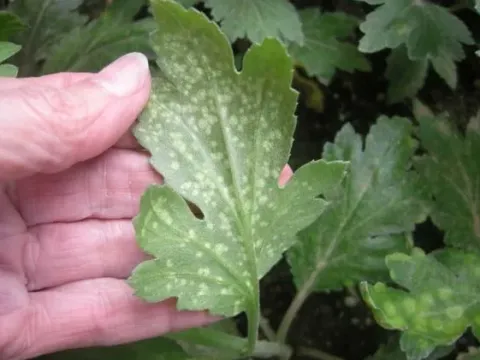
The foliage of infected plants often undergoes changes, manifesting as chlorotic mottling, mosaic patterns, or general growth stunting.
Chrysanthemum bushes affected by the aspermy virus are noticeably stunted and often develop a "witches' broom" appearance due to excessive branching.
In severe cases, flowering may be absent entirely, or the inflorescences appear deformed and unsuitable for commercial sale or decorative use.
The development of the virus is favored by high temperatures in greenhouses, which stimulate the activity of insect vectors and accelerate viral particle metabolism.
Large-scale spread of the infection occurs in protected cultivation when aphid populations are not effectively controlled, as they act as the primary risk factor.
Using stock plants derived from infected specimens guarantees the spread of the disease to all subsequent planting material within the operation.
The presence of weeds around greenhouses and flower fields creates a favorable environment for viral reservoirs and the breeding of insect vectors.
Failure to adhere to sanitary protocols when using gardening tools significantly increases the scale of infection in high-density planting conditions.
Chrysanthemum aspermy virus causes significant economic losses to flower producers by rendering the commodity product entirely unsellable.
The loss of decorative quality makes both cut flowers and potted plants valueless, resulting in direct financial loss for the grower.
Systemic infection leads to the degeneration of cultivars, forcing producers to destroy entire stock collections that may have taken years to accumulate.
The decline in the physiological condition of plants reduces their resistance to other pathogens, further weakening the ornamental crop.
In large-scale nurseries, latent carriage of the virus can lead to widespread epiphytotics that affect the entire greenhouse production cycle.
The primary control method is the exclusive use of virus-free planting material obtained through tissue culture techniques (meristem propagation).
It is essential to strictly control aphid populations by applying regular insecticide treatments as part of an integrated pest management strategy.
All tools used for pruning and taking cuttings must be disinfected with alcohol or sodium hypochlorite solutions after working on each individual plant.
Infected bushes must be immediately removed from the field and destroyed by burning to prevent the spread of infection to healthy specimens.
- Regular monitoring of plantings for signs of deformation.
- Eradication of weeds that serve as viral reservoirs.
- Installation of insect-proof netting on greenhouse vents.
- Strict quarantine for all incoming plant material.