
Barley yellow dwarf
Probable virus
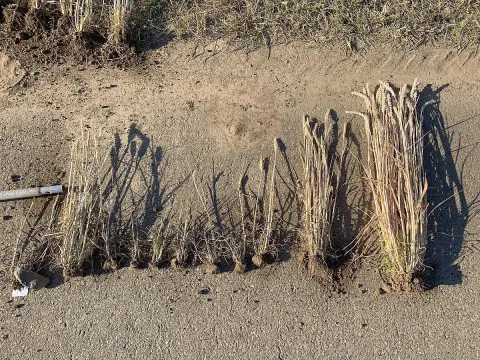
The main external sign of the disease is a significant stunting of plant growth, causing crops to look depressed and short compared to healthy plants.
What the section contains
Barley yellow dwarf
Leaf blades of infected wheat and barley show characteristic yellow, orange, or reddish discoloration, typically starting from the tips and spreading downwards.
Excessive tillering is often observed; plants appear overly dense but produce weak, underdeveloped shoots that fail to reach the stem elongation stage.
The root system of diseased plants is poorly developed, making them highly sensitive to environmental stressors such as drought or severe winter conditions.
In cases of late-season infection, plants may head, but the ears remain small, sterile, or produce shriveled, biologically inferior grains.
The causative agent of the disease is the Barley yellow dwarf virus (BYDV), which belongs to the Luteoviridae family.
The virus consists of spherical particles containing single-stranded RNA and is highly specialized regarding its insect vectors.
In nature, the virus is not transmitted mechanically, through soil, seeds, or pollen, which is a key biological characteristic of the infection.
The primary mode of pathogen transmission is through sucking insects—various species of cereal aphids that transmit the virus in a persistent manner.
After acquiring the virus while feeding on the sap of an infected plant, the aphid remains capable of infecting healthy crops throughout its entire life.
The development of epiphytotics depends directly on the population density of vectors—cereal aphids—in winter crops during the autumn season.
Favorable conditions for mass aphid reproduction include a warm and dry early autumn, which facilitates rapid virus accumulation within the agroecosystem.
Early-sown winter crops are at a higher risk of infection because the flight activity of winged aphids is most intense during that period.
The spread of infection is exacerbated by the presence of viral reservoirs, such as wild grasses, where the virus survives throughout the summer months.
Mild winters contribute to the survival of aphids and overwintering virus forms, providing a source of primary inoculum for spring crop growth.
The harmfulness of the virus lies in a sharp reduction of grain yield, which can exceed 30–50% in heavily infected areas.
Infection leads to metabolic disruptions, reduced photosynthetic activity, and a slowdown in overall physiological development of the crop.
It impacts both the quantity of grain harvested and its quality, resulting in decreased 1000-grain weight and reduced protein content.
Infected crops lose resistance to other pathogens and environmental stresses, often leading to the total death of productive stems.
Economic losses are increased by the necessity for additional protective measures and the potential need to replant severely damaged fields.
The primary control method involves agronomic practices, such as adhering to optimal sowing dates to avoid peak aphid flight periods.
It is essential to implement effective weed control around field borders, as weeds serve as reservoirs for both the virus and its aphid vectors.
Using insecticidal seed treatments is recommended, as this protects young winter seedlings during their most vulnerable stage of development.
If aphid populations reach economic injury thresholds, spraying crops with systemic insecticides is necessary to curb the spread of the virus.
A crucial long-term measure is the breeding and adoption of wheat and barley varieties that possess genetic resistance or tolerance to the virus.